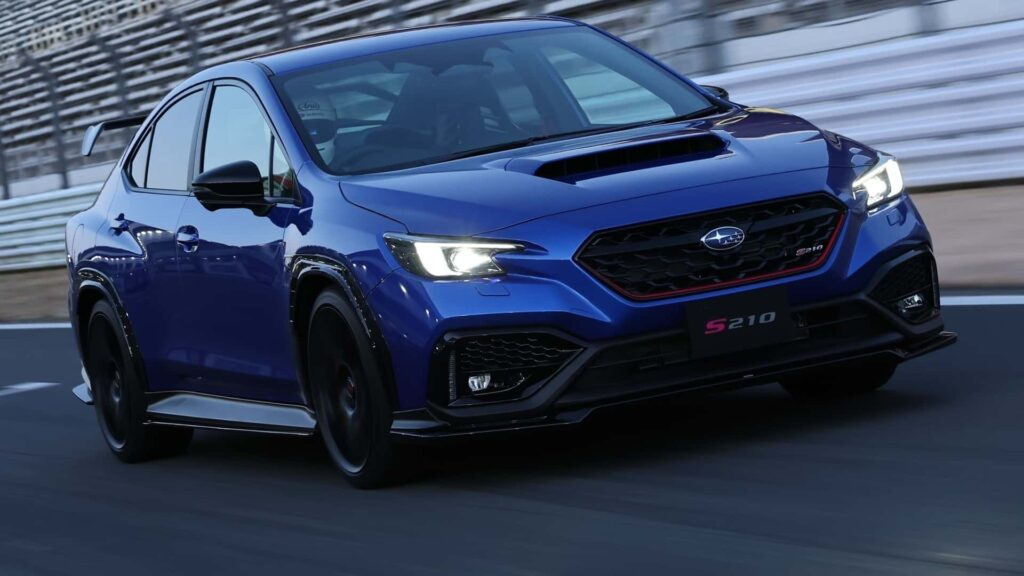
When I look at the Subaru WRX and WRX STI, I see two cars that share a strong performance heritage but approach that performance in different ways. The WRX has traditionally offered enthusiasts a practical way to enter Subaru’s turbocharged, all-wheel-drive performance world, while the STI has represented a more specialized and aggressive interpretation of the same basic philosophy.
For anyone considering a WRX to STI conversion, I believe the first thing to understand is that an STI is not simply a WRX with a larger turbocharger or a more powerful engine. The differences extend into the transmission, differentials, all-wheel-drive system, brakes, suspension, cooling, electronics, wheels, tires, and overall chassis setup.
That distinction is important because it changes how I would approach the entire project. If the objective is simply to make a WRX faster, there are many ways to accomplish that without attempting to reproduce every STI component. If the objective is to create something that behaves as closely as possible to a factory STI, the project becomes much more complicated.
In my analysis, the best conversion starts with a clearly defined goal. An owner should decide whether the target is STI appearance, STI-like street performance, higher engine output, improved handling, track capability, or a near-complete mechanical conversion.
We can then select modifications according to that objective rather than buying parts simply because they carry an STI name.
Key Takeaways
The most important point I want to establish is that a WRX to STI conversion is a systems project. The engine is important, but it represents only one part of the vehicle’s performance equation.
The major areas I would evaluate include the engine, turbocharger, transmission, clutch, differentials, AWD system, brakes, suspension, wheels, tires, cooling system, ECU, wiring, and supporting components.
A WRX can be made extremely capable without becoming a literal STI. In fact, for many street-focused owners, I believe a carefully planned WRX build may be more practical than trying to replace the entire factory drivetrain.
At the same time, a genuine STI has advantages because Subaru engineered its major systems to operate together from the factory.
For example, historical STI specifications included specialized drivetrain technology, stronger performance-oriented braking hardware, dedicated suspension tuning, and more sophisticated differential control. These characteristics cannot be reproduced simply by increasing horsepower.
My practical recommendation is to determine the intended use first, inspect the existing WRX, establish a realistic budget, and then select modifications in a logical order.
What Does WRX to STI Mean?
The phrase WRX to STI can describe several different types of modifications.
For one owner, it may mean installing STI wheels, seats, exterior parts, and badges. For another, it may mean installing STI brakes and suspension. A much more ambitious owner might attempt to replace the engine, transmission, differentials, driveshaft, axles, ECU, wiring, and other drivetrain components.
I would separate these projects because they have completely different levels of complexity.
An appearance conversion is primarily cosmetic. A performance conversion is mechanical. A full STI-style conversion can involve mechanical, electrical, electronic, and structural considerations.
That distinction also helps prevent unrealistic expectations.
If someone installs an STI rear wing and wheels, the car may look more like an STI, but its mechanical behavior remains fundamentally that of a WRX.
If someone installs an STI engine, the engine may produce more power, but the transmission, AWD system, differentials, brakes, and suspension may still differ.
From my perspective, the phrase “WRX to STI” should therefore be treated as a description of a project rather than a single modification.
Why the STI Is More Than an Engine
One of the most common misunderstandings surrounding the WRX and STI is the assumption that the STI’s identity comes primarily from its engine.
The engine is certainly important, but Subaru’s performance engineering went considerably further.
The STI formula historically combined a high-output turbocharged BOXER engine with a manual performance transmission, sophisticated AWD control, limited-slip differentials, performance suspension, stronger brakes, and other supporting systems.
This matters because performance is created by interaction between systems.
Consider a hypothetical example. Suppose I increase a WRX’s engine output substantially. Acceleration may improve, but the additional power also increases demands on the clutch, transmission, drivetrain, cooling system, tires, and brakes.
If I increase power without considering those systems, the vehicle may become faster in one measurement while becoming less balanced overall.
I believe that is why the best WRX builds focus on the complete car.
Engine Differences Between WRX and STI
The engine is naturally one of the first areas enthusiasts consider.
Different generations of WRX and STI used different engine families, and that means there is no universal engine-swap formula.
For example, historical WRX models used engines such as the EJ20 and FA20 depending on generation and market, while various STI models used high-performance versions of the EJ-series engines. Later WRX generations moved to different engine architecture again.
This means I would never choose an engine simply because it is labeled “STI.”
Before an engine swap, I would examine compatibility with the transmission, ECU, wiring harness, fuel system, intercooler, turbocharger, cooling system, exhaust, sensors, engine mounts, and immobilizer system.
The physical installation is only one part of the job.
A hypothetical example illustrates this well. Imagine an owner finds a complete STI engine and assumes the project is almost finished because the engine includes the turbocharger and intake components.
Once the installation begins, the owner may discover that the engine management system, wiring, transmission, fuel system, sensors, or accessories do not directly match the original WRX.
The project has therefore become much larger than an engine replacement.
In my view, planning the electronics before buying the engine can prevent many expensive surprises.
Transmission Considerations
The transmission deserves almost as much attention as the engine.
Depending on the model year and market, the WRX has been available with different manual and automatic/CVT configurations, while traditional STI models were strongly associated with a six-speed manual transmission.
The transmission determines how effectively the engine’s torque reaches the wheels.
When power increases significantly, clutch capacity and transmission durability become increasingly important.
I would therefore ask several questions before making major engine modifications:
- What transmission is currently installed?
- What torque level is the transmission expected to handle?
- Is the clutch original?
- Are replacement drivetrain components readily available?
- Is the intended vehicle primarily a street car or track car?
- Does the desired STI drivetrain physically and electronically integrate with the WRX chassis?
A strong engine paired with an unsuitable transmission does not create a complete performance package.
AWD and Differential Systems
This is one of the areas where the STI formula becomes particularly interesting.
The WRX and STI have historically used Subaru’s Symmetrical All-Wheel Drive philosophy, but STI models received more advanced driver-control and differential hardware.
One of the best-known features is DCCD, or Driver Controlled Center Differential.
DCCD allows the driver to influence center-differential behavior, giving the drivetrain a different level of adjustability compared with simpler AWD configurations.
For me, this is an important part of understanding why STI performance cannot be reduced to horsepower.
Imagine two cars with identical engine output. If one has a more sophisticated differential system and the other does not, their behavior while accelerating through a corner can be different.
The difference may be especially noticeable when road conditions become inconsistent.
On dry pavement, wet pavement, gravel, or other low-grip surfaces, how torque is managed between the axles can influence traction and vehicle response.
That is why I would treat the AWD and differential systems as core components in a serious STI-style conversion.
Suspension and Chassis Upgrades
More power only becomes useful when the chassis can control it.
STI models historically received dedicated suspension tuning and performance-oriented chassis hardware.
For a WRX conversion, I would consider:
- Springs
- Dampers
- Struts
- Anti-roll bars
- Bushings
- Alignment
- Control arms
- Steering response
- Ride height
- Wheel and tire combination
The correct setup depends on the intended use.
A daily-driven WRX should not necessarily receive an extremely stiff track suspension.
A hypothetical example makes this clear. A very stiff suspension may feel impressive on smooth pavement, but rough roads can cause the tires to lose consistent contact with the surface. A moderately firm setup with appropriate damping can sometimes provide a better real-world balance.
I believe suspension tuning should therefore be based on the road and driving environment rather than on stiffness alone.
Brakes and Tires
I would put brakes and tires near the top of the upgrade list.
The tires are the only components directly connecting the vehicle to the road, while the brakes must convert the car’s kinetic energy into heat repeatedly and safely.
Historical STI models used substantially more aggressive braking systems than many standard WRX configurations, including high-performance Brembo systems on various versions.
For a performance-oriented WRX, I would consider the complete braking system rather than focusing only on caliper size.
The system can include:
- Calipers
- Rotors
- Brake pads
- Brake fluid
- Brake lines
- Cooling
- Master-cylinder compatibility
- Wheel clearance
Tire selection is equally important.
A high-output WRX on poor tires may struggle to use its additional power effectively.
In my view, a balanced car with excellent tires and brakes is more useful than a high-horsepower car with weak supporting equipment.
WRX and STI System Comparison
The following table shows how I would think about the major areas when planning a conversion.
| System | WRX Configuration | STI-Oriented Approach | Priority |
|---|---|---|---|
| Engine | WRX-specific turbo engine | STI-spec or carefully engineered performance engine | High |
| Turbocharger | Factory WRX unit | Matched performance turbo | High |
| Transmission | WRX manual or automatic/CVT depending on model | STI-style manual where compatible | Very High |
| AWD | WRX AWD configuration | STI-oriented differential and AWD system | Very High |
| Differentials | Model-dependent | STI limited-slip configuration | Very High |
| Brakes | Standard WRX system | Performance brake system | High |
| Suspension | WRX setup | STI-oriented suspension | High |
| Tires | Standard performance tires | Higher-performance tires | Very High |
| Cooling | Factory system | Upgraded according to power and use | High |
| ECU | WRX calibration | Correctly matched calibration | Very High |
| Interior | WRX equipment | Optional STI components | Low |
| Exterior | WRX bodywork | Optional STI styling | Low mechanically |
The table shows why I would prioritize mechanical systems over cosmetic components.
If the objective is better performance, I would spend the budget on tires, brakes, suspension, cooling, drivetrain reliability, and proper engine calibration before spending heavily on appearance.
How I Would Build a WRX Toward STI Performance
Step 1: Establish the Vehicle Baseline
Before changing anything, I would inspect the existing car.
The engine should be healthy, the cooling system should function properly, the transmission should operate correctly, and the suspension and brakes should be in good condition.
A modified vehicle magnifies weaknesses that already exist.
For example, an old cooling-system problem that is manageable during normal driving may become much more serious after adding a larger turbocharger and increasing engine load.
Baseline maintenance is therefore part of the performance build.
Step 2: Decide the Intended Use
I would determine whether the car is primarily:
- A daily driver
- A weekend performance car
- A track vehicle
- A drag-oriented build
- A rally-inspired project
- A complete STI replica
Each objective produces a different parts list.
A daily driver benefits from reliability and comfort.
A track car needs sustained braking, cooling, tire performance, and predictable handling.
A rally-oriented vehicle has completely different suspension and durability requirements.
Step 3: Upgrade Tires and Brakes
For a street performance build, I would establish good tire and brake capability before chasing substantial power.
This creates a better foundation for later modifications.
Step 4: Upgrade Suspension
Next, I would match the suspension to the tires and intended driving environment.
Alignment should also be considered because even excellent suspension components can perform poorly if the geometry is inappropriate.
Step 5: Improve Cooling
Once engine output is increased, thermal management becomes increasingly important.
Depending on the build, this may include improved intercooling, radiator capacity, oil cooling, airflow management, and heat management around the turbocharger and exhaust.
Step 6: Upgrade the Engine
Only after the supporting systems are prepared would I move toward major engine modifications.
The exact path could involve a larger turbocharger, upgraded fuel components, improved intercooling, exhaust modifications, or a different engine.
The important point is that every component should be selected as part of one package.
Step 7: Address the Drivetrain
If the power target becomes substantial, I would evaluate the clutch, transmission, differential, axles, driveshaft, and other drivetrain components.
This is where a performance build begins moving closer to a genuine STI-style conversion.
Step 8: Tune the Complete Vehicle
The ECU calibration should match the exact hardware.
I would not assume that a calibration designed for one turbocharger, injector configuration, fuel type, and engine combination will work correctly on another setup.
Practical WRX to STI Upgrade Paths
Different owners need different levels of conversion. I would divide the possibilities into several categories.
| Build Type | Main Objective | Complexity | Best For |
|---|---|---|---|
| STI Appearance | Visual similarity | Low | Owners wanting STI styling |
| Street Performance | Better acceleration and handling | Moderate | Daily and weekend drivers |
| STI-Inspired Build | Engine, brakes, suspension, drivetrain improvements | High | Enthusiasts seeking STI character |
| STI Drivetrain Conversion | Replicate major STI drivetrain hardware | Very High | Dedicated projects |
| Full Conversion | Replace multiple major systems | Extremely High | Specialized builds |
| Genuine STI | Factory-integrated package | Depends on availability | Owners wanting original STI engineering |
For most owners, I believe the second or third approach offers the best balance.
A full conversion can be fascinating, but it may require so many components that the financial argument becomes difficult.
Common WRX to STI Mistakes
Focusing Only on Horsepower
Horsepower is an attractive number because it is easy to understand.
However, I would not use horsepower as the sole measure of a successful conversion.
A car needs traction, braking, cooling, drivetrain durability, and chassis control.
Ignoring the Transmission
Increasing torque without evaluating the transmission and clutch can create problems.
The transmission should be considered before the engine reaches its final output.
Choosing Parts From Different Generations Without Verification
A component that fits one WRX or STI generation may not directly fit another.
This can apply to:
- Engines
- Transmissions
- Differentials
- Brakes
- Suspension
- Wiring
- ECU
- Axles
- Driveshafts
I would verify compatibility using the exact model year and chassis rather than relying on the STI name alone.
Spending Too Much on Appearance
An STI wing can make a WRX look dramatically different.
It cannot transform the drivetrain.
I have nothing against cosmetic modifications, but I would keep the distinction between appearance and performance clear.
Ignoring Cooling
More power usually means more heat.
A reliable performance build must account for thermal management.
Using an Aggressive Tune Without Supporting Hardware
An engine tune should correspond to the actual hardware and fuel being used.
I would avoid chasing a headline power figure at the expense of reliability and drivability.
What Makes DCCD Valuable?
DCCD is one of the features that I believe best demonstrates the difference between a powerful WRX and an STI-oriented performance car.
The system gives the driver additional control over the center differential.
That means the drivetrain can be adjusted according to driving conditions and preferences.
A hypothetical cornering scenario shows why this matters. Imagine accelerating out of a corner where the road surface has less grip than expected. The way the AWD system manages torque can influence how confidently the car puts power down.
The benefit is therefore not simply greater acceleration.
It is greater control over the vehicle’s behavior.
For an owner seeking a genuine STI-style mechanical experience, DCCD can therefore become an important part of the project.
However, I would not recommend attempting a DCCD conversion without first establishing exact compatibility between the transmission, differentials, wiring, ECU, and chassis.
ECU, Wiring, and Electronics
Modern performance vehicles rely heavily on electronic communication.
An engine swap or drivetrain conversion can therefore create problems that are not visible when looking only at mechanical components.
The ECU may need to communicate with:
- Engine sensors
- Throttle system
- Fuel system
- Immobilizer
- Dashboard
- Transmission
- AWD controls
- Stability systems
- Other vehicle modules
This is one reason I would create an electrical compatibility plan before starting a major conversion.
A mechanically compatible engine is not necessarily an electronically compatible engine.
In my analysis, this is one of the most overlooked parts of ambitious conversion projects.
Cooling and Reliability
I believe reliability should remain one of the main goals of a WRX-to-STI project.
Turbocharged engines generate significant heat, particularly when modified for higher output.
The cooling system may therefore need to be evaluated according to:
- Engine output
- Turbocharger size
- Climate
- Traffic conditions
- Track use
- Oil temperature
- Coolant temperature
- Intake temperature
- Exhaust temperature
A daily-driven car in moderate conditions has different requirements from a track car repeatedly operating at high load.
That is why I would avoid blindly installing the largest available cooling components.
The correct solution is the one that matches the actual application.
Why a Factory STI Is Difficult to Replicate
Subaru did not create the STI by changing only one component.
The performance package evolved across multiple systems.
Historically, STI models included specialized engine configurations, stronger braking hardware, suspension tuning, drivetrain controls, differentials, and other components designed around performance driving.
This is why I would distinguish between “STI-powered” and “STI-equivalent.”
A WRX can potentially produce more horsepower than an STI while still lacking some of the drivetrain characteristics that define the STI experience.
The reverse is also possible. A modestly powered build can still have excellent braking, suspension, and handling characteristics.
From my perspective, balance is the real goal.
The STI Motorsport Connection
The STI name has a long connection with Subaru’s motorsport activities.
Subaru established Subaru Tecnica International in 1988 to undertake motorsport activities and develop specialized performance components.
The WRX and STI subsequently became closely associated with rally competition and Subaru’s performance identity.
That history helps explain why STI engineering emphasizes control and durability as well as engine output.
One Subaru description of the STI positioned it as an expression of the company’s performance philosophy.
“the ultimate expression of the Subaru philosophy”
Source: Subaru
I find this quotation relevant because it reflects the idea that STI represented a complete engineering philosophy rather than merely a larger engine.
Another Subaru description emphasized the performance character of the model.
“WRX STI really is the essence of Subaru performance”
Source: Blair Read, Subaru Australia
The statement reinforces the relationship between the STI name and Subaru’s broader performance identity.
Subaru later described the STI and its future performance direction in another official statement.
“The WRX STI and the STI brand represent the zenith of Subaru’s performance vehicles”
Source: Subaru
These statements are useful context when deciding what a WRX-to-STI conversion is actually trying to reproduce.
Is a WRX to STI Conversion Worth It?
My answer depends entirely on the starting point.
If an owner already has a healthy WRX and wants a customized performance vehicle, modifying that car can make sense.
If the owner wants the exact characteristics of a factory STI, I would compare the complete conversion cost against the cost of obtaining a genuine STI.
This comparison is particularly important when the project requires replacing:
- Engine
- Transmission
- Differential
- AWD controls
- Brakes
- Suspension
- ECU
- Wiring
- Cooling
- Wheels
- Tires
- Interior components
At that point, the conversion can become extremely extensive.
I believe a partial conversion often provides a better balance.
For example, a WRX owner might upgrade the tires, brakes, suspension, cooling, turbo system, and ECU while retaining the original transmission and AWD architecture.
That can create a very capable street car without introducing unnecessary drivetrain complexity.
When I Would Choose a WRX Build
I would favor modifying the WRX when the owner:
- Already owns a healthy WRX
- Wants a personalized performance setup
- Has a specific power target
- Wants to spread modifications over time
- Values customization
- Does not require a factory STI drivetrain
- Wants to maintain the WRX’s original identity
This approach provides flexibility.
The owner can prioritize the systems that actually matter for the intended driving environment.
When I Would Choose a Genuine STI
I would seriously consider a factory STI when:
- The goal is specifically STI performance
- A suitable STI is available
- The conversion requires extensive drivetrain replacement
- Original factory integration matters
- The owner values the STI’s historical identity
- The cost of conversion approaches the value of a genuine STI
The factory vehicle has an obvious advantage: its major systems were engineered together.
That does not mean every WRX project is inferior.
It simply means the starting point should be chosen according to the objective.
WRX to STI Budget Planning
I would never begin a major conversion without creating a complete budget.
The budget should include more than the headline parts.
I would account for:
- Engine
- Turbocharger
- Transmission
- Clutch
- Differential
- Axles
- Driveshaft
- ECU
- Wiring
- Fuel system
- Cooling
- Intercooling
- Exhaust
- Brakes
- Suspension
- Tires
- Wheels
- Labor
- Fluids
- Tuning
- Unexpected repairs
Unexpected costs are particularly important with older vehicles.
A used drivetrain component may appear inexpensive until it requires refurbishment, seals, bearings, installation labor, or additional compatible parts.
For that reason, I would calculate the complete project rather than adding prices one component at a time.
WRX to STI Project Priority Table
| Priority | Component | Reason |
|---|---|---|
| 1 | Vehicle inspection | Establishes a reliable starting point |
| 2 | Tires | Determines road grip |
| 3 | Brakes | Improves stopping capability |
| 4 | Cooling | Supports reliable performance |
| 5 | Suspension | Improves chassis control |
| 6 | ECU calibration | Matches engine hardware |
| 7 | Engine/turbo | Provides additional performance |
| 8 | Clutch | Supports increased torque |
| 9 | Transmission | Handles drivetrain demands |
| 10 | Differentials/AWD | Moves the build toward STI behavior |
| 11 | Interior | Improves appearance and driver environment |
| 12 | Exterior | Primarily cosmetic |
The order is not universal, but it demonstrates how I would prioritize the project.
I would generally put functional performance ahead of cosmetic similarity.
Can a Modified WRX Be Better Than an STI?
Yes, depending on what “better” means.
A heavily modified WRX could be faster in a straight line.
Another WRX might be designed specifically for circuit handling.
A third could prioritize comfort while producing significantly more power than the original car.
The advantage of modification is customization.
The disadvantage is that the owner becomes responsible for ensuring that the individual components work together.
A factory STI gives the owner an integrated package.
A modified WRX gives the owner freedom.
I believe both approaches can be rewarding.
The Future of the STI Concept
The STI story has changed as Subaru’s vehicle strategy has evolved.
Subaru announced that it would not produce an internal-combustion WRX STI based on the then-new WRX platform and indicated that it was considering future performance technologies.
This means enthusiasts should distinguish between the traditional STI formula and the future direction of the STI brand.
The classic formula centered heavily on a turbocharged BOXER engine, manual transmission, advanced AWD, differential control, performance suspension, and powerful brakes.
Future performance vehicles may use different technologies.
For owners interested in classic WRX and STI platforms, this makes preservation and thoughtful modification particularly interesting.
Final Recommendations
From my perspective, I would approach a WRX to STI project in three possible ways.
The first is the sensible street build. This means keeping the original drivetrain architecture while improving tires, brakes, suspension, cooling, and engine performance in moderation.
The second is the STI-inspired performance build. This goes further by considering engine, turbocharger, clutch, transmission, differentials, and advanced AWD components.
The third is the full conversion. This attempts to reproduce a much larger portion of the STI mechanical package.
For most owners, I believe the first or second approach makes the most sense.
The full conversion can be technically fascinating, but it requires significant planning and may not make financial sense compared with obtaining a genuine STI.
The most important lesson is simple: do not build around a horsepower number alone.
Build around the complete driving experience.
Conclusion
For me, the central lesson of a WRX to STI project is that the STI experience comes from the interaction of many systems rather than one special component. The engine matters, but so do the transmission, differential system, AWD controls, brakes, suspension, tires, cooling, ECU, and chassis.
I believe the best approach is to define the desired driving experience before purchasing parts. If the goal is a dependable street car, I would focus on balanced upgrades instead of attempting a complete mechanical conversion. If the goal is to reproduce the characteristics of a factory STI, I would carefully investigate the drivetrain and electronic compatibility before beginning.
We can reasonably conclude that a modified WRX can become an exceptionally capable performance car, but it should not automatically be described as mechanically identical to a factory STI. The factory STI was engineered as a complete package.
My recommendation is to inspect the vehicle, establish a realistic budget, choose a specific performance target, verify every component for compatibility, and upgrade supporting systems before chasing maximum power. That strategy gives the project a much better chance of becoming reliable, balanced, and enjoyable.
Frequently Asked Questions
What Is a WRX to STI Conversion?
A WRX to STI conversion is a project in which a Subaru WRX is modified to reproduce some or many of the performance, drivetrain, suspension, braking, electronic, or visual characteristics associated with the STI. The conversion can be simple or extremely complex. I would define the desired level before starting because installing STI-style wheels and brakes is very different from replacing the engine, transmission, differentials, AWD controls, ECU, and wiring.
Can a WRX Be Converted Into an STI?
A WRX can be modified to resemble or incorporate various STI components, but the practicality depends heavily on the exact generation and model year. Some components may be relatively straightforward, while others can require extensive mechanical and electronic work. I would not assume that every STI component is directly compatible with every WRX. A complete conversion should be treated as a specialized engineering project rather than a simple parts swap.
Is an STI Engine Enough to Make a WRX an STI?
No. An STI engine can provide a major performance change, but an engine alone does not reproduce the complete STI package. The transmission, differential system, AWD controls, suspension, brakes, cooling, ECU, and other systems also contribute to the vehicle’s characteristics. In my view, calling an engine-swapped WRX an STI can be misleading unless the vehicle has actually received a much broader conversion.
Is WRX to STI Conversion Expensive?
It can become expensive, particularly when the project involves the drivetrain and electronics. Engine, transmission, differential, clutch, ECU, wiring, brakes, suspension, cooling, labor, and tuning can all add to the total cost. The exact amount varies according to the model year, parts used, labor rates, and conversion scope. I recommend preparing a complete budget before buying major components.
Is DCCD Important for an STI Conversion?
DCCD can be very important for an owner who wants to reproduce the drivetrain characteristics of a traditional STI. It provides additional control over center-differential behavior and is one of the technologies associated with STI performance. However, installing such a system can involve considerable compatibility issues. The transmission, differentials, electronics, wiring, and chassis all need to be considered together.
Should I Upgrade Brakes Before Increasing Power?
I generally recommend making sure the braking and tire systems are appropriate for the intended performance level before adding substantial power. More power increases acceleration, but it does not automatically improve stopping capability. Good tires and suitable brakes create a safer and more balanced foundation for additional engine performance.
Can a Modified WRX Be Faster Than an STI?
Yes. A modified WRX can potentially exceed a factory STI in acceleration or another specific performance measurement. However, being faster in one area does not mean that the cars are mechanically equivalent. A factory STI combines engine, transmission, AWD, differential, suspension, and braking systems into an integrated package, while a modified WRX depends on the choices made by its owner.
Should I Buy an STI Instead of Converting My WRX?
I would compare both options before committing to a large conversion. If the project requires replacing most of the drivetrain and supporting systems, purchasing a genuine STI may be the simpler route if one is available at an acceptable price. If you already own a healthy WRX and want a customized vehicle, a targeted performance build may offer better value and greater personalization.
Sources and References
- Subaru historical information on WRX, STI, and Subaru motorsport development
- Subaru technical specifications for WRX and WRX STI models
- Subaru WRX and WRX STI model brochures
- Subaru information concerning the future of the STI brand
- Subaru Australia information on WRX STI history and performance
- Subaru historical information concerning Subaru Tecnica International
Disclaimer
This article is provided for general informational and educational purposes. WRX and WRX STI specifications can vary by model year, market, trim, engine, transmission, and chassis. Engine swaps, drivetrain conversions, ECU modifications, suspension changes, brake upgrades, and other performance modifications can involve significant mechanical and electrical risks. Always verify compatibility for the exact vehicle and consult an appropriately qualified automotive professional before undertaking major modifications. Local laws, inspection requirements, emissions rules, and registration regulations may also apply.