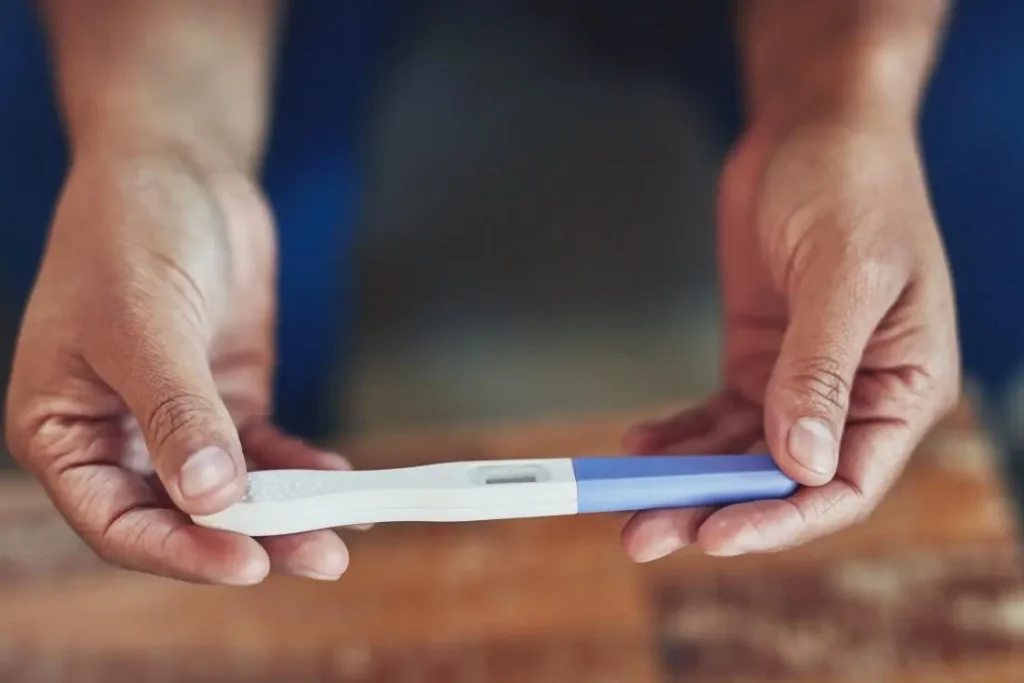
When I explain a chemical pregnancy, I believe the first thing to clarify is that it is a genuine pregnancy loss that happens extremely early. The term can sound confusing because the pregnancy may be detected by a pregnancy test but may never become visible on an ultrasound. In practical terms, a chemical pregnancy occurs when implantation has taken place and the pregnancy produces detectable human chorionic gonadotropin, or hCG, but the pregnancy stops developing very early.
For many people, the experience begins with a positive home pregnancy test. A few days later, bleeding may begin, another test may become faint or negative, or blood testing may show that hCG is falling. Because these events can happen close to the expected menstrual period, some people never realize they experienced an early pregnancy loss.
From my perspective, understanding the difference between a chemical pregnancy and a late period, as well as knowing when medical evaluation is necessary, can reduce confusion. It can also help people avoid blaming themselves for something that is usually outside their control.
Early pregnancy loss is common. The American College of Obstetricians and Gynecologists explains that early pregnancy loss occurs in about 10 out of 100 known pregnancies. That statistic describes a broad medical pattern, but I do not think statistics should minimize the emotional importance of an individual loss.
We can reasonably conclude that a chemical pregnancy deserves both accurate medical explanation and sensitivity. In this article, I will examine what it is, why it happens, how it may be recognized, what hCG tells us, how doctors investigate it, what recovery can involve, and what it may mean for future pregnancies.
Key Takeaways About Chemical Pregnancy
A chemical pregnancy is an extremely early pregnancy loss, generally occurring before an ultrasound can identify the pregnancy. It is often recognized through a positive pregnancy test or detectable hCG followed by evidence that the pregnancy is no longer developing.
The most important points I would emphasize are:
- A chemical pregnancy is a real early pregnancy loss.
- It commonly happens before an ultrasound can show a pregnancy.
- A positive test followed by bleeding can be one indication, but symptoms alone cannot confirm the diagnosis.
- Falling hCG can provide important evidence that a pregnancy is no longer progressing.
- Chromosomal abnormalities are a major cause of early pregnancy loss.
- One chemical pregnancy does not automatically mean infertility.
- Ordinary activities such as exercise, working, sex, or emotional stress are not generally considered causes of miscarriage.
- Repeated early losses may deserve additional medical evaluation.
- Severe abdominal or pelvic pain, shoulder pain, fainting, dizziness, or heavy bleeding require prompt medical attention.
- Emotional reactions vary, and there is no “correct” way to feel after an early pregnancy loss.
In my view, the most useful overall lesson is that a chemical pregnancy is primarily a description of how early the pregnancy ended, not a judgment about the person’s health, behavior, or future fertility.
What Is a Chemical Pregnancy?
A chemical pregnancy is a pregnancy that ends very early, usually before five weeks of pregnancy and before an ultrasound can normally demonstrate the pregnancy. The term “chemical” refers to detection through biochemical evidence, especially hCG, rather than evidence visible on ultrasound.
Once implantation occurs, cells associated with the developing pregnancy begin producing hCG. Pregnancy tests are designed to detect this hormone. If development stops at a very early stage, hCG eventually decreases. A person may therefore experience a positive pregnancy test followed by a weaker test, a negative test, or bleeding.
I think this explains why the experience can be confusing. Someone may reasonably ask, “How could I have been pregnant if nothing was visible on the scan?” The answer is that the pregnancy may have ended before it reached the stage at which ultrasound could identify it.
Why the Term “Chemical” Can Be Misleading
The word chemical does not mean that chemicals caused the pregnancy loss. It describes the method through which the pregnancy was detected.
A home pregnancy test uses a chemical reaction to detect hCG. Blood testing can also detect and quantify the hormone. In contrast, a later pregnancy may be confirmed through ultrasound findings.
This distinction is important because terminology can influence how people understand their experience. From my perspective, calling the event a chemical pregnancy should never imply that it was imaginary or that it was merely a faulty test.
Chemical Pregnancy and Very Early Pregnancy Loss
Chemical pregnancy is generally considered a form of very early pregnancy loss. The pregnancy begins, hCG becomes detectable, and then development stops.
For example, imagine a hypothetical person whose period is expected on Monday. They receive a positive pregnancy test on Wednesday. By Saturday, they develop bleeding, and a subsequent test becomes negative. That pattern can be consistent with a chemical pregnancy, although a healthcare professional would consider the complete clinical situation before making a diagnosis.
We should therefore avoid treating one symptom or one test result as definitive.
What Causes a Chemical Pregnancy?
In my analysis, one of the most important facts is that the exact cause is often unknown.
Chromosomal abnormalities are strongly associated with early pregnancy loss. An embryo requires appropriate genetic information to develop normally. If there is a significant chromosomal problem, normal development may stop very early.
ACOG explains that about half of early miscarriages occur because the embryo does not develop properly, often because of an abnormal number of chromosomes.
Other factors may also be associated with miscarriage, including certain uterine abnormalities, hormonal or metabolic conditions, infections, thyroid disorders, diabetes, and other medical circumstances. However, identifying an association does not mean that every chemical pregnancy has one of these causes.
Chromosomal Problems and Early Development
Chromosomes carry genetic information needed for the development of the embryo and placenta. Errors can occur during the formation of eggs or sperm or during the earliest stages after fertilization.
Some chromosomal abnormalities may be incompatible with continued development. When that happens, the pregnancy may stop progressing before it becomes visible on ultrasound.
A 2024 study involving 900 products of conception reported chromosomal abnormalities in 56.25% of uncontaminated samples. This provides evidence of how frequently chromosomal abnormalities can be involved in early pregnancy loss, although the findings from pregnancy-loss tissue cannot automatically be applied to every individual chemical pregnancy.
I believe this distinction is important. Medical research can tell us what commonly happens across groups of patients, but it cannot necessarily tell us why one particular pregnancy ended.
Other Possible Factors
A healthcare professional may consider other factors when pregnancy losses happen repeatedly or when the medical history suggests a particular concern.
Potential considerations can include:
- Uterine structural abnormalities
- Certain hormonal conditions
- Thyroid disease
- Diabetes and other metabolic disorders
- Some infections
- Certain genetic factors
- Reproductive age
- Previous pregnancy losses
- Some fertility-related circumstances
Not every person who experiences a chemical pregnancy needs an extensive investigation. A single very early loss may happen without a clear explanation.
Can Stress or Exercise Cause a Chemical Pregnancy?
This is one of the questions I believe deserves a particularly clear answer.
Ordinary emotional stress, everyday work, routine exercise, sex, and arguments are not generally considered causes of miscarriage. ACOG specifically notes that activities such as exercise, working, having sex, and stress do not cause early pregnancy loss in the usual circumstances.
After a chemical pregnancy, it is common for someone to review the previous few days and search for something they might have done differently.
A hypothetical example makes the problem clear. Suppose someone went for a normal walk on Tuesday and began bleeding on Wednesday. The timing might make the person wonder whether the walk caused the loss. But temporal association alone does not establish causation.
From my perspective, this is where evidence-based information is particularly important. People should not automatically convert coincidence into blame.
ACOG states:
“In almost every case, miscarriage is not a woman’s fault.”
American College of Obstetricians and Gynecologists
This quotation matters because self-blame can become one of the most painful parts of pregnancy loss. The medical evidence does not support blaming ordinary activities for most early miscarriages.
Chemical Pregnancy Symptoms
The symptoms of a chemical pregnancy can vary considerably. Some people experience symptoms that resemble a slightly delayed or heavier menstrual period, while others notice more obvious pregnancy-related changes.
Possible signs include:
- A positive pregnancy test followed by bleeding
- A period arriving later than expected
- Heavier-than-usual menstrual bleeding
- Menstrual-like cramping
- Stronger cramps than usual
- A pregnancy test becoming weaker
- A later negative pregnancy test
- Pregnancy symptoms disappearing
- Passage of clots or tissue
However, none of these symptoms by itself proves that a chemical pregnancy occurred.
Positive Pregnancy Test Followed by Bleeding
This is perhaps the most recognizable pattern.
A person may receive a positive home pregnancy test and then experience bleeding several days later. If hCG is subsequently falling, the pattern may be consistent with an early pregnancy loss.
But bleeding during early pregnancy has multiple possible explanations. Therefore, I would not recommend assuming that every positive test followed by bleeding represents a chemical pregnancy.
Cramping and Abdominal Discomfort
Mild or moderate cramping may occur with an early pregnancy loss. The sensation can resemble menstrual cramps.
Severe pain, however, should not simply be attributed to a chemical pregnancy. Severe or one-sided pelvic or abdominal pain can require urgent evaluation, particularly because ectopic pregnancy must sometimes be excluded.
Changes in Pregnancy Symptoms
Some people notice that breast tenderness, nausea, fatigue, or other early pregnancy symptoms decrease.
This can happen as pregnancy-related hormones fall, but symptoms alone are not reliable enough to diagnose pregnancy loss.
A pregnancy can also have changing symptoms without necessarily indicating a problem. That is why I believe testing and professional assessment are more reliable than trying to interpret symptoms independently.
How hCG Helps Identify a Chemical Pregnancy
Human chorionic gonadotropin is one of the central pieces of information in a very early pregnancy.
After implantation, pregnancy tissue produces hCG. Home pregnancy tests detect whether the hormone is present above a particular detection threshold. Blood tests can measure hCG quantitatively.
If a pregnancy stops developing, hCG generally begins to fall.
This creates a common sequence:
- Pregnancy begins.
- hCG becomes detectable.
- A pregnancy test becomes positive.
- Development stops very early.
- hCG begins decreasing.
- Bleeding may occur.
- The pregnancy test eventually becomes negative.
This sequence can help explain why a person may see two apparently contradictory test results.
Why One Home Test Cannot Tell the Whole Story
Home pregnancy tests are useful, but they do not provide a complete picture of pregnancy health.
A darker line does not automatically prove that a pregnancy is developing normally, and a lighter line does not always prove that a pregnancy is ending. Urine concentration, testing time, test sensitivity, and other factors can influence the appearance of a result.
For a more precise assessment, clinicians may use quantitative blood hCG measurements and repeat them when appropriate.
ACOG explains that hCG measurements can be useful in evaluating early pregnancy, but additional testing may sometimes be required.
How Doctors Diagnose a Chemical Pregnancy
Diagnosis depends on the timing of the pregnancy, test results, symptoms, and medical history.
A clinician may consider:
- The date of the last menstrual period
- The date of the positive pregnancy test
- The results of subsequent pregnancy tests
- Quantitative blood hCG
- Changes in hCG over time
- Vaginal bleeding
- Pelvic or abdominal pain
- Ultrasound findings
- Risk factors for ectopic pregnancy
- Previous pregnancy history
The Role of Blood Testing
Quantitative hCG testing can be particularly useful because it provides an actual hormone concentration rather than simply a positive or negative result.
A repeat measurement can show whether hCG is rising, falling, or changing in a way that requires further investigation.
For example, suppose a person has a positive pregnancy test but then develops bleeding. A clinician might order a quantitative hCG test and repeat it after an appropriate interval. If the level falls substantially, that information can support a diagnosis of pregnancy loss.
The exact interpretation depends on timing and the clinical situation.
The Role of Ultrasound
Ultrasound is valuable in early pregnancy, but timing is critical.
If a pregnancy is extremely early, there may be nothing visible on ultrasound even when the pregnancy is developing. Conversely, if hCG is declining and the expected pregnancy structures never become visible, the overall picture may support an early pregnancy loss.
ACOG notes that several ultrasound examinations or hCG measurements may sometimes be needed before a pregnancy loss can be confirmed.
I believe this is an important reason not to panic over one early scan without discussing the result in context.
Why Ectopic Pregnancy Must Be Considered
A positive pregnancy test with bleeding can sometimes be associated with ectopic pregnancy, in which the pregnancy develops outside the uterus.
Ectopic pregnancy can become dangerous if it causes internal bleeding. This is why symptoms matter.
Urgent medical attention is particularly important when there is:
- Severe abdominal or pelvic pain
- Pain concentrated on one side
- Shoulder-tip pain
- Fainting
- Significant dizziness
- Weakness
- Heavy bleeding
- Severe pain accompanied by bleeding
NHS guidance identifies severe abdominal pain, shoulder pain, dizziness, fainting, and heavy bleeding among warning signs requiring urgent assessment.
From my perspective, this is one area where reassurance should never replace caution. A person should not assume that bleeding after a positive test is harmless simply because a chemical pregnancy is possible.
Chemical Pregnancy Versus a Late Period
A chemical pregnancy and a late period can appear similar.
The major distinction is evidence of pregnancy.
With a chemical pregnancy, hCG was produced and became detectable. With a late menstrual period, there is no confirmed pregnancy.
The following hypothetical example illustrates the difference.
Imagine Person A has a period three days late but never receives a positive pregnancy test. Their period then begins. There is no clear evidence that pregnancy occurred.
Person B receives a positive pregnancy test and later develops bleeding with falling hCG. The second pattern is more consistent with an early pregnancy loss.
Even so, individual cases require appropriate interpretation.
Chemical Pregnancy Versus Miscarriage Later in Pregnancy
A chemical pregnancy is itself a type of early pregnancy loss, but the timing distinguishes it from later miscarriage.
A chemical pregnancy generally occurs before ultrasound evidence of the pregnancy is established. Later miscarriage may occur after a gestational sac, embryo, or heartbeat has already been identified.
This distinction can affect how doctors evaluate and manage the situation.
For example, someone who experiences pregnancy loss after an ultrasound-confirmed pregnancy may require different medical management from someone whose pregnancy ended before an ultrasound could identify it.
I would therefore avoid treating all pregnancy losses as medically identical.
First Comparison Table: Chemical Pregnancy, Clinical Pregnancy, and Late Period
The following table summarizes the main differences.
| Feature | Chemical Pregnancy | Clinical Pregnancy | Late Period |
|---|---|---|---|
| Pregnancy test | Usually positive | Positive | Usually negative |
| hCG | Detectable | Detectable | No pregnancy-related hCG |
| Ultrasound | Usually no pregnancy visible | Pregnancy may become visible at appropriate timing | No pregnancy |
| Bleeding | Common after loss | May or may not occur | Menstrual bleeding |
| Development | Stops very early | Continues unless a complication develops | No confirmed pregnancy |
| Typical timing | Very early | Later than chemical pregnancy | Around or after expected period |
| Confirmation | hCG and clinical context | Pregnancy testing and ultrasound when appropriate | Menstrual history and testing |
The most important point is that a late period cannot be distinguished from every chemical pregnancy using symptoms alone. A documented positive pregnancy test or hCG result provides important context.
Can a Chemical Pregnancy Be Prevented?
In many cases, there is no specific way to prevent a chemical pregnancy.
When a pregnancy ends because of a severe chromosomal abnormality, there may have been no realistic action that could have prevented the outcome.
This is an uncomfortable fact, but I believe it is better to be honest about it than to suggest that a particular diet, supplement, exercise program, or lifestyle routine can guarantee a pregnancy will continue.
General preconception health still matters. People planning pregnancy can discuss medications, existing medical conditions, prenatal vitamins, nutrition, smoking, alcohol, and other relevant issues with a healthcare professional.
However, supporting healthy pregnancy is different from guaranteeing a successful pregnancy.
What Happens Physically After a Chemical Pregnancy?
Because a chemical pregnancy occurs so early, the physical process may resemble menstruation.
Some people experience:
- Vaginal bleeding
- Cramping
- Passage of clots
- Temporary hormonal changes
- A return toward their normal menstrual cycle
The exact duration varies.
The body may continue to have detectable hCG for a period after the pregnancy ends, depending on the initial hormone level and how quickly it falls.
A person should follow medical advice about whether repeat testing is needed.
Emotional Recovery Can Be Different
Physical recovery and emotional recovery do not necessarily happen at the same speed.
Someone may feel physically well within a short time but emotionally devastated. Another person may feel relatively calm about an extremely early loss.
Neither response is inherently wrong.
I believe the emotional significance of pregnancy loss should not be measured only by gestational age. A person may have imagined a future pregnancy immediately after receiving a positive test, even if the pregnancy existed for only a short time.
ACOG recognizes that emotional responses after miscarriage can include sadness, grief, guilt, anger, anxiety, and other feelings.
Can You Get Pregnant Again After a Chemical Pregnancy?
Many people can conceive again after a chemical pregnancy.
Ovulation may return relatively quickly after an early pregnancy loss. Cleveland Clinic notes that ovulation can occur around two weeks after a chemical pregnancy in some people.
The appropriate timing for trying again depends on the person’s physical recovery, emotional readiness, medical history, and advice from their healthcare professional.
There is no requirement for everyone to follow exactly the same timeline.
A person who wants to conceive again might discuss:
- Prenatal vitamins
- Folic acid
- Medication safety
- Existing medical conditions
- Ovulation timing
- Menstrual-cycle changes
- Previous pregnancy history
From my perspective, the most sensible approach is individualized rather than based on a universal rule.
Does a Chemical Pregnancy Affect Fertility?
One chemical pregnancy does not automatically mean that someone is infertile.
Many people who experience an early pregnancy loss later have healthy pregnancies. A single early loss is therefore not enough evidence to conclude that future pregnancy is impossible.
However, repeated losses can be different.
If someone repeatedly experiences positive pregnancy tests followed by very early losses, it may be appropriate to speak with an obstetrician-gynecologist or fertility specialist.
The purpose of evaluation is not necessarily to assume that something is seriously wrong. Rather, it is to determine whether there is an identifiable factor that deserves attention.
When Repeated Chemical Pregnancies May Need Investigation
One early loss can occur randomly. A pattern of repeated early pregnancy losses may justify a more detailed medical history.
Depending on the circumstances, a healthcare professional may consider:
- Reproductive history
- Menstrual-cycle history
- Age-related factors
- Thyroid function
- Diabetes or other metabolic conditions
- Uterine anatomy
- Genetic factors
- Previous pregnancy outcomes
- Fertility treatment history
- Other relevant medical conditions
Not every possible test is appropriate for every patient.
I believe evaluation should be based on the individual’s history rather than a generic checklist copied from another person’s experience.
What Does a Chemical Pregnancy Mean for a Future Pregnancy?
A chemical pregnancy does not automatically predict that the next pregnancy will end in loss.
This is an important distinction between possibility and prediction.
A previous chemical pregnancy tells us that one particular pregnancy did not continue. It does not, by itself, tell us that another pregnancy cannot develop normally.
Chromosomal abnormalities can occur randomly, and the biological circumstances of one conception are not necessarily repeated in the next.
For that reason, I would be cautious about statements suggesting that one early loss determines someone’s reproductive future.
How to Prepare for Another Pregnancy
If someone wants to try again, preparation can focus on practical health measures.
A healthcare professional can help review:
- Prenatal supplementation
- Folic acid intake
- Prescription and over-the-counter medications
- Chronic medical conditions
- Vaccination status
- Smoking and alcohol exposure
- Previous pregnancy history
- Appropriate timing of prenatal care
These measures do not eliminate the possibility of miscarriage, but they can support overall reproductive health.
The emotional side should also be considered. Trying again immediately may feel hopeful to one person and overwhelming to another.
There is no single emotional timetable.
Common Misconceptions About Chemical Pregnancy
A Chemical Pregnancy Is Not Simply a False Positive
A chemical pregnancy can produce a genuine positive test because hCG is present.
A later negative test may reflect the fact that hCG has fallen after the pregnancy stopped developing.
False-positive tests can happen for other reasons, including certain medications and medical circumstances, but a positive test followed by a later negative result does not automatically mean the first test was faulty.
A Chemical Pregnancy Is Not Usually Caused by Exercise
Normal physical activity is not generally considered a cause of miscarriage.
Someone should not automatically assume that walking, exercising, lifting ordinary objects, or working caused the pregnancy loss simply because the activity happened shortly beforehand.
Stress Is Not a Simple Explanation
Emotional stress is often blamed for pregnancy loss, but ordinary stress is not generally considered a cause of miscarriage.
This does not mean severe or chronic stress is irrelevant to overall health. It means that blaming a particular stressful event for a chemical pregnancy is generally unsupported.
A Chemical Pregnancy Does Not Automatically Mean Infertility
One chemical pregnancy does not establish infertility.
Many people later conceive successfully.
Bleeding Does Not Always Mean Chemical Pregnancy
Bleeding can occur for many reasons during early pregnancy. Because ectopic pregnancy and other complications are possible, significant pain or heavy bleeding should receive medical attention.
What I Would Recommend Discussing With a Doctor
If someone has experienced a suspected chemical pregnancy, I think the most productive medical discussion is focused on facts.
Useful questions include:
- Does my test history fit an early pregnancy loss?
- Should my hCG be measured?
- Do I need repeat hCG testing?
- Is ultrasound appropriate?
- Does my situation require evaluation for ectopic pregnancy?
- How long should I expect bleeding?
- When might my cycle return?
- When can I try to conceive again?
- Do I need to change any medications?
- Should I take a prenatal vitamin?
- If I experience another loss, when should I seek further evaluation?
Keeping a simple timeline can make the appointment easier.
For example:
Monday: Positive home pregnancy test
Thursday: Bleeding begins
Friday: Cramping increases
Following week: Pregnancy test becomes negative
That information gives the healthcare professional a clearer picture than simply saying that “something went wrong.”
Verified Medical Perspective on Early Pregnancy Loss
A third quotation is useful because it emphasizes that pregnancy loss is not necessarily caused by personal behavior.
“Miscarriage is not caused by exercise, sex, or stress.”
American College of Obstetricians and Gynecologists
I believe this is especially relevant to chemical pregnancy because the loss occurs so early that people may search intensely for an explanation. The evidence suggests that most early losses are related to biological problems rather than ordinary activities.
The appropriate response is therefore not to create a list of personal behaviors to blame but to understand the medical circumstances and seek evaluation when needed.
Emotional Support After a Chemical Pregnancy
Medical facts answer only part of the question.
Someone experiencing a chemical pregnancy may feel grief, disappointment, anger, confusion, anxiety, numbness, or relief. These reactions can coexist.
A person might feel deeply attached to the pregnancy after only a few days, while another person might view the event more clinically. Neither response needs to be justified.
Support can come from:
- A partner
- Family members
- Trusted friends
- A healthcare professional
- A counselor
- A pregnancy-loss support group
I believe people should be allowed to describe the experience in the way that feels accurate to them.
There is also no requirement to “move on” according to someone else’s timetable.
Warning Signs That Should Not Be Ignored
Although a chemical pregnancy is usually an early loss, not every episode of bleeding after a positive pregnancy test is uncomplicated.
Seek urgent medical care for symptoms such as:
- Severe abdominal pain
- Severe pelvic pain
- One-sided pain
- Shoulder-tip pain
- Fainting
- Significant dizziness
- Weakness
- Very heavy bleeding
- Severe pain combined with bleeding
These symptoms can occur with ectopic pregnancy or other complications.
The safest principle is straightforward: if a possible early pregnancy is accompanied by severe or concerning symptoms, medical evaluation is more important than trying to identify the condition at home.
Second Comparison Table: Symptoms and Appropriate Responses
The following table provides a practical way to think about different situations.
| Situation | Possible Interpretation | Appropriate Response |
|---|---|---|
| Positive pregnancy test with no concerning symptoms | Pregnancy may be continuing normally | Follow routine pregnancy-care guidance |
| Positive test with light spotting | Several possibilities | Contact a healthcare professional for advice |
| Positive test followed by bleeding and falling hCG | Early pregnancy loss may have occurred | Follow recommended medical testing |
| Positive test with severe abdominal pain | Possible serious complication | Seek urgent medical care |
| Positive test with shoulder pain or fainting | Possible emergency | Seek immediate medical assessment |
| Repeated very early pregnancy losses | May warrant further evaluation | Discuss history with a healthcare professional |
| Emotional distress after loss | Common response to pregnancy loss | Seek emotional support if needed |
The key takeaway from this table is that symptoms should be interpreted in context. A chemical pregnancy is not something that can always be diagnosed accurately from bleeding alone.
Practical Example: Understanding a Suspected Chemical Pregnancy
Consider a hypothetical scenario.
A person has a regular menstrual cycle and expects their period on June 10. On June 12, they take a home pregnancy test and receive a positive result. On June 16, they develop bleeding and cramps.
There are several pieces of information here:
- Pregnancy was suggested by the initial positive test.
- Bleeding followed several days later.
- The subsequent test was negative.
- The timing is compatible with a very early pregnancy loss.
However, that sequence alone does not establish exactly what happened.
A healthcare professional might consider quantitative hCG testing, symptoms, medical history, and whether further evaluation is necessary.
This example demonstrates why a diagnosis should not be based solely on the visual appearance of a home test.
Practical Example: When Symptoms Require Urgent Attention
Now consider a different hypothetical scenario.
A person has a positive pregnancy test and begins bleeding. Instead of experiencing ordinary menstrual-like cramps, they develop severe pain concentrated on one side of the abdomen and feel faint.
I would consider this a situation requiring urgent medical attention rather than one where the person should simply wait for the bleeding to stop.
The reason is that ectopic pregnancy can be dangerous and cannot safely be ruled out merely because the pregnancy is very early.
This example illustrates an important distinction: the label chemical pregnancy should never prevent appropriate investigation of warning signs.
Expert-Informed Recommendations for Readers
Based on established medical guidance, I would organize the practical recommendations into several principles.
Do Not Diagnose Yourself From Bleeding Alone
Bleeding after a positive pregnancy test can have different causes. A healthcare professional may need hCG testing, ultrasound, or other assessment.
Do Not Blame Ordinary Activities
Exercise, work, sex, and ordinary emotional stress are not generally considered causes of miscarriage.
Pay Attention to Warning Symptoms
Severe pain, fainting, dizziness, shoulder pain, or heavy bleeding should prompt urgent medical assessment.
Consider Further Evaluation if Losses Repeat
One chemical pregnancy is often an isolated event. Recurrent early losses may justify discussion with an appropriate healthcare professional.
Protect Emotional Well-Being
Grief after an early pregnancy loss is legitimate. Support can be helpful even when the pregnancy ended very early.
What Research Tells Us About Early Pregnancy Loss
Research into early pregnancy loss consistently points toward genetic and chromosomal factors as major contributors.
A 2023 analysis of spontaneous pregnancy losses found that approximately half of examined pregnancy-loss samples had chromosomal abnormalities, reinforcing the important role of genetic factors in early loss.
These findings should not be interpreted as saying that every chemical pregnancy has a chromosomal abnormality. In many individual cases, there is no testing available to determine the precise reason.
From my perspective, the practical conclusion is more modest: early development is biologically complex, and many pregnancy losses occur because development cannot proceed normally.
That understanding can help replace the question “What did I do wrong?” with a more medically appropriate question: “What does my individual situation require now?”
Chemical Pregnancy and Fertility Treatment
Chemical pregnancies can also occur in people using fertility treatments.
In fertility treatment, pregnancy testing may be closely monitored, which can make very early losses more visible than they would be without frequent testing.
Certain fertility medications may also contain hCG or otherwise affect the interpretation of pregnancy tests. This is one reason people undergoing fertility treatment should interpret test results with their fertility team.
The circumstances can be different from those of someone who simply takes a home pregnancy test after a missed period.
Chemical Pregnancy and Pregnancy Tests
Modern pregnancy tests are sensitive enough to identify pregnancy very early.
That sensitivity can be beneficial because it allows earlier recognition of pregnancy. At the same time, it means people may become aware of pregnancies that would previously have gone unnoticed.
This creates an important statistical and emotional consideration.
Some pregnancies end so early that, without testing, the person might simply believe their period was slightly late.
I believe this explains why chemical pregnancies can feel more common now. Better detection can reveal events that previously would not have been recognized as pregnancies.
Frequently Asked Questions
What is a chemical pregnancy?
A chemical pregnancy is a very early pregnancy loss that occurs before the pregnancy can usually be seen on ultrasound. The pregnancy produces detectable hCG, which can make a home pregnancy test positive, but development stops very early. A person may subsequently experience bleeding and falling hCG. The term describes the early stage and the biochemical detection of pregnancy; it does not mean that the pregnancy was imaginary or that a faulty test necessarily caused the positive result.
What are the most common chemical pregnancy symptoms?
Common chemical pregnancy symptoms include a positive pregnancy test followed by vaginal bleeding, a delayed period, menstrual-like cramps, heavier bleeding than usual, or a pregnancy test that later becomes negative. Some people may have few noticeable symptoms. These signs are not specific enough to establish the diagnosis by themselves. If bleeding is heavy or accompanied by severe pain, dizziness, fainting, or other concerning symptoms, medical assessment is important.
Can a chemical pregnancy be caused by stress?
Ordinary emotional stress is not generally considered a cause of miscarriage. ACOG explains that activities such as exercise, working, sex, and stress do not generally cause early pregnancy loss. I believe this is important because people often look for something they did immediately before the loss and may incorrectly blame themselves. In most cases, the biological reason for a chemical pregnancy cannot be identified from everyday activities.
Can a chemical pregnancy cause a positive pregnancy test?
Yes. A chemical pregnancy can produce a genuine positive pregnancy test because pregnancy-related hCG is present. If the pregnancy stops developing, hCG generally decreases, and a later test may become faint or negative. A positive test followed by a negative test therefore does not automatically mean the original test was defective. Other causes of false-positive tests exist, so the complete clinical situation should be considered when interpreting the result.
How long does a chemical pregnancy last?
A chemical pregnancy ends extremely early, usually before the pregnancy can be visualized on ultrasound. The physical process may involve bleeding and cramping around the time a menstrual period is expected. The exact duration varies from person to person. Hormone levels may take some time to return toward nonpregnant levels. If bleeding is unusually heavy, persistent, or accompanied by severe pain or other warning signs, medical assessment should not be delayed.
Does a chemical pregnancy mean I cannot get pregnant again?
No. One chemical pregnancy does not automatically mean that future pregnancy is impossible. Many people who experience an early pregnancy loss later have healthy pregnancies. I would avoid interpreting one loss as proof of infertility. If very early pregnancy losses happen repeatedly, however, it may be appropriate to discuss the pattern with an obstetrician-gynecologist or fertility specialist and determine whether additional evaluation is warranted.
When should I seek urgent care after a chemical pregnancy?
Urgent care is appropriate when bleeding or suspected early pregnancy loss is accompanied by severe abdominal or pelvic pain, one-sided pain, shoulder-tip pain, fainting, significant dizziness, weakness, or heavy bleeding. These symptoms can occur with serious conditions such as ectopic pregnancy. It is therefore unsafe to assume that every episode of bleeding after a positive pregnancy test is simply a chemical pregnancy.
Can exercise cause a chemical pregnancy?
Routine exercise is not generally considered a cause of miscarriage. A person should not automatically blame walking, ordinary exercise, working, or other routine physical activity for an early pregnancy loss. The majority of early pregnancy losses are associated with biological factors rather than ordinary daily activities. If someone has specific exercise restrictions because of an individual medical condition or fertility treatment, those instructions should come from their healthcare professional.
Should I wait before trying to conceive after a chemical pregnancy?
The appropriate timing depends on the individual’s physical recovery, emotional readiness, medical circumstances, and healthcare professional’s advice. Ovulation can return relatively quickly after a very early pregnancy loss. Some people may feel ready to try again soon, while others may need more time emotionally. Rather than following a universal rule, I believe it is better to discuss personal circumstances with a healthcare professional.
Can repeated chemical pregnancies indicate a problem?
Repeated chemical pregnancies may warrant additional evaluation, particularly when the losses form a pattern. Possible areas of investigation can include reproductive history, uterine anatomy, thyroid or metabolic conditions, genetic factors, and other circumstances depending on the individual. A single early pregnancy loss does not necessarily indicate a serious medical problem. Repeated losses are different because the pattern may provide a reason for a more detailed evaluation.
Sources and References
- American College of Obstetricians and Gynecologists, information on early pregnancy loss.
- Cleveland Clinic, medical information concerning chemical pregnancy.
- Cleveland Clinic, medical information concerning miscarriage and pregnancy loss.
- NHS guidance concerning miscarriage and warning signs during early pregnancy.
- NHS guidance concerning vaginal bleeding during pregnancy.
- Published research concerning chromosomal abnormalities in early pregnancy loss.
- Peer-reviewed research examining genetic abnormalities associated with spontaneous pregnancy loss.
Disclaimer
This article is provided for general educational purposes and is not a substitute for personalized medical advice, diagnosis, or treatment. A suspected chemical pregnancy cannot always be confirmed from symptoms or home pregnancy tests alone. Bleeding after a positive pregnancy test can have several causes, including conditions requiring urgent treatment. Anyone experiencing severe abdominal or pelvic pain, shoulder pain, fainting, significant dizziness, weakness, or heavy bleeding should seek prompt medical attention. Questions about hCG testing, ultrasound, treatment, future conception, recurrent pregnancy loss, medications, or fertility should be discussed with a qualified healthcare professional.