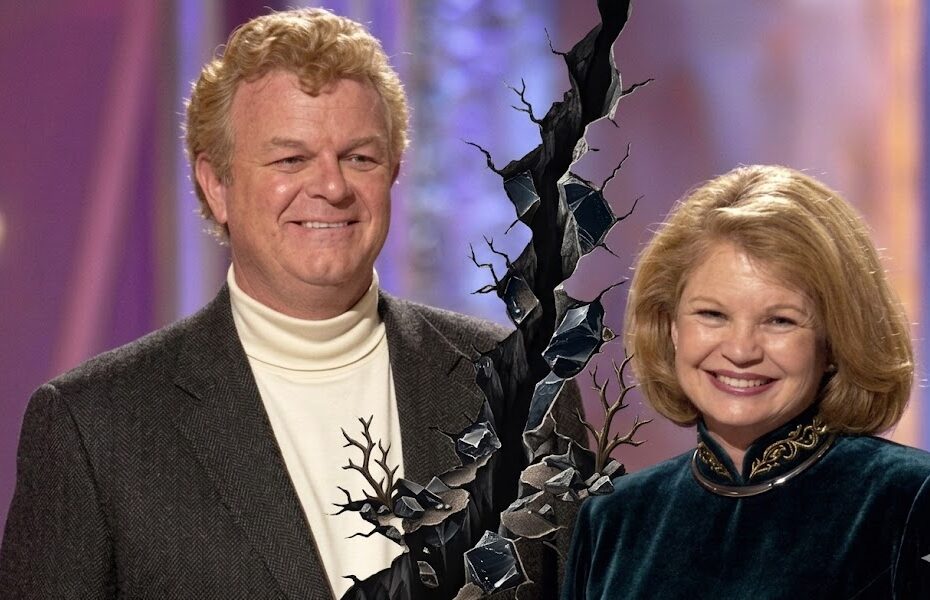
When I look at the public record surrounding Symbria Wright, I find a biography defined less by a large archive of interviews and appearances than by a handful of documented connections. Wright is principally known because she was married to actor Johnny Whitaker, the former child star recognized for playing Jody Davis on Family Affair. Reliable biographical sources identify Wright as Whitaker’s wife from June 15, 1984, until their divorce in 1988, while an encyclopedia entry also describes her as an agent.
That limited record creates an important distinction between what we know and what people merely repeat online. I believe that distinction is especially important in Wright’s case because she appears to have lived a much more private life than her former husband. Numerous internet biographies attempt to fill the gaps surrounding her birth, childhood, education, career, family and later life, but many of those claims are not supported by the strongest available sources.
From my perspective, the most responsible approach is therefore not to manufacture a complete life story from fragments. Instead, we can reconstruct the documented portions of Wright’s public biography, explain her connection to Whitaker, examine what contemporary and retrospective sources say about their marriage, and clearly identify information that remains uncertain.
I also think there is a broader lesson here. A person does not become a public figure merely because a famous actor once married them. The public may reasonably be interested in a celebrity marriage, but that interest does not automatically justify speculation about the private individual involved.
This article follows that principle. Where the record is firm, I state the fact. Where sources disagree or rely on weak documentation, I identify the uncertainty. And where information appears to concern Wright’s private life without a meaningful public-interest justification, I do not treat curiosity as evidence.
Key Takeaways About Symbria Wright
The central facts about Symbria Wright can be summarized relatively simply. Available biographical records identify her as Johnny Whitaker’s former wife and indicate that their marriage took place on June 15, 1984, ending in divorce in 1988. Encyclopedia.com identifies Wright as an agent, while other biographical accounts have described her as a theatrical or talent agent.
The record also places the marriage within an interesting period of Whitaker’s life. He had already become famous as a child actor through Family Affair and later appeared in films and television programs including Tom Sawyer and Sigmund and the Sea Monsters. His public career makes the marriage historically interesting, but it does not turn Wright herself into a conventional celebrity with a fully documented public biography.
I would therefore describe Wright as a private person with a documented connection to a well-known entertainment figure, rather than as an entertainer whose own career is comprehensively recorded.
The following table separates the strongest publicly documented information from claims that should be treated cautiously.
Documented Facts and Uncertain Claims About Symbria Wright
| Topic | What the available record supports | What remains uncertain |
|---|---|---|
| Name | Symbria Wright | Whether she has used other names publicly |
| Marriage | Married Johnny Whitaker on June 15, 1984 | Detailed circumstances surrounding the relationship |
| Divorce | Marriage ended in divorce in 1988 | The complete private reasons for the divorce |
| Profession | Encyclopedia.com identifies her as an agent | The full scope and duration of her career |
| Early life | Some secondary sources associate her with Reseda, California | Exact birth date, childhood and family background |
| Education | Some online biographies associate her with Brigham Young University | Specific program, degree or graduation details attributable to Wright |
| Later life | Little reliable public information | Current occupation, residence, relationships and private activities |
| Public appearances | No substantial independent public record located | Whether she participated in events not preserved online |
The important takeaway is that the absence of information is not evidence that something happened. I believe readers should resist the common biographical temptation to convert an incomplete record into a fictionalized complete one.
Who Is Symbria Wright?
Symbria Wright is best known publicly as the former wife of Johnny Whitaker, whose childhood acting career made him recognizable to American television audiences. Encyclopedia.com specifically lists Whitaker as having married Symbria Wright, described there as an agent, on June 15, 1984, with the marriage ending in 1988.
That description gives us an important clue about Wright’s own connection to the entertainment business. Calling her an agent indicates that she was not simply a person who happened to marry an actor. At least according to the biographical record, she had a professional relationship with the entertainment industry herself.
However, I want to be careful about what that description does not tell us. It does not establish the complete nature of her career, the agency or clients with whom she worked, the years she spent in the profession, or whether she continued working as an agent after her marriage ended
. Some describe her as being from Reseda, California, while others attach educational or family details to her without presenting sufficiently strong documentation.
In my analysis, that means those details should not be presented as established biography. A responsible article can mention that such claims circulate, but it should not silently promote them into facts.
This is particularly important because Wright does not appear to have built a public career around interviews, acting appearances, books, television programs or other forms of documentation that would naturally preserve biographical information.
Symbria Wright and Johnny Whitaker: The Marriage That Defined Her Public Profile
The clearest chapter in Wright’s publicly documented biography is her marriage to Johnny Whitaker. The available record gives the marriage date as June 15, 1984, and the divorce year as 1988. IMDb independently lists the same marriage period.
At the time, Whitaker was already an established former child star. He had appeared on television from childhood and was especially associated with Family Affair, which ran on CBS from 1966 to 1971. Later, he appeared in projects including Snowball Express, The Biscuit Eater, Napoleon and Samantha, Tom Sawyer and Sigmund and the Sea Monsters.
That background explains why the marriage eventually attracted retrospective interest. Wright was connected to someone whose childhood image had become part of television history.
Yet I think it is a mistake to reverse the relationship and treat Wright’s biography as merely an extension of Whitaker’s. Her identity existed independently of his acting career, even if the surviving public record gives us comparatively little information about it.
One especially useful source for understanding how Whitaker viewed his own childhood career is his public commentary about Family Affair. The quotation matters because it reminds us that the public image of a child star and the adult’s interpretation of that image are not always identical.
“Family Affair was much too sugar-and-spice. We never lied or cheated. No children are as angelic as we were supposed to be.”
Johnny Whitaker, quoted in IMDb’s biographical record.
I find that observation relevant to Wright because it illustrates how easily a nostalgic public image can simplify the people who lived around it. Family Affair created a recognizable version of Whitaker for millions of viewers, but his later life was substantially more complicated than that television image.
Wright’s marriage to Whitaker therefore belongs to a period when his public identity as a former child star intersected with his adult life. But we should distinguish the historical record of the marriage from speculation about what the relationship was like privately.
What We Can Reliably Say About the 1984–1988 Marriage
The four-year timeframe is among the strongest facts available. Wright and Whitaker married in 1984 and divorced in 1988. Encyclopedia.com identifies Wright as an agent, while IMDb independently records the marriage dates.
Some secondary accounts describe the wedding as taking place at the Mormon Temple in Westwood, followed by a reception at the Beverly Hills Hotel. However, because the strongest sources I located do not independently establish every detail of that account, I would treat the venue description more cautiously than the marriage and divorce dates themselves.
This distinction may seem small, but it is central to accurate biography. A date confirmed by multiple established biographical records deserves more confidence than an elaborate anecdote repeated across entertainment websites.
The same principle applies to claims about the couple’s domestic life. Some online sources assert that Wright and Whitaker briefly operated a delicatessen in Provo, Utah. That detail appears in a retrospective source about Whitaker, but it is not enough by itself to construct a broader business biography for Wright.
A hypothetical example helps explain the difference. Suppose a biography says that Person A and Person B operated a small business during their marriage. That fact, if verified, tells us something about their shared circumstances. It does not automatically tell us Person B’s long-term occupation, income, personality, education or later career.
I believe that distinction is especially valuable when writing about someone who is not a major public figure. We should use documented associations to understand the historical record without turning those associations into assumptions about an individual’s entire life.
How Johnny Whitaker’s Later Accounts Changed Interest in Wright
The marriage became more prominent in retrospect because Whitaker later spoke openly about a difficult period in his adult life. In a 2023 interview with KSL, he described the end of his marriage as one of several events that he said contributed to a prolonged period of personal turmoil.
That testimony is important, but it must be handled carefully. It represents Whitaker’s account of his own life, not an independent explanation of Wright’s motives or behavior.
In the KSL interview, Whitaker said:
“My wife divorced me after three years so she could marry the man who gave me my bachelor party. That was strike No. 1.”
Johnny Whitaker, speaking to KSL.
The quote matters because it explains why the marriage has continued to appear in accounts of Whitaker’s life. It does not, however, provide a complete account of Wright’s perspective, because Wright herself is not represented by a comparable publicly available interview in the sources I found.
That asymmetry is crucial. When one person in a relationship gives interviews and the other remains largely silent, the available historical narrative naturally becomes one-sided.
I therefore would not present Whitaker’s account as the definitive explanation for the divorce. It is evidence of how he interpreted the experience. It is not evidence that every detail was understood or experienced identically by Wright.
A later Salt Lake Tribune profile provides another example of Whitaker discussing his past. He described his adult struggles and the long process through which he eventually rebuilt his life.
“I’ve learned that I just have to grow up as well.”
Johnny Whitaker, quoted by The Salt Lake Tribune.
From my perspective, that quotation is useful because it shifts the emphasis away from assigning responsibility for the marriage’s end and toward Whitaker’s own retrospective understanding of his life.
The same interview also shows that Whitaker has spoken publicly about recovery, responsibility and forgiveness. Those subjects belong primarily to his biography, however, and I would resist the temptation to use them as a substitute for Wright’s own story.
The Difference Between Symbria Wright’s Biography and Johnny Whitaker’s Biography
The biggest challenge in researching Wright is that the two biographies have dramatically different levels of documentation.
Whitaker was a working actor from childhood. His professional credits, interviews, film appearances, television appearances and public events created an extensive record. IMDb, for example, documents his acting and directing work and records his marriage to Wright.
Wright, by contrast, appears primarily in records generated because of her relationship with Whitaker. Encyclopedia.com provides a concise professional description of her as an agent, but the source does not supply the kind of extensive career chronology available for Whitaker.
This creates a familiar problem in celebrity biography: the spouse can become highly searchable without actually becoming highly documented.
We can see how that works in practice. Search engines may produce dozens of pages about a person’s name, but quantity of pages does not equal quality of evidence. One poorly sourced claim can be copied by another website, then copied again until it looks established simply because it appears frequently.
For Wright, that pattern is particularly visible in claims about her birth date, childhood, education, family and later life. Some websites state those details confidently, while more cautious sources acknowledge that much of the information is not firmly established.
I believe readers should therefore distinguish search visibility from historical certainty.
A Practical Evidence Test for Biography Research
When I assess a biographical claim, I find it useful to ask four questions: Who originally reported it? Can another credible source independently confirm it? Is the information relevant to the person’s public story? And does publishing it unnecessarily expose private information?
This approach is especially important when a biography concerns a person who has not actively sought public attention.
For example, if an established encyclopedia independently records Wright’s marriage dates, I consider those dates reasonably strong. If a website gives a precise birthday but offers no reliable source, I would not treat that date as established.
Likewise, if a source claims that Wright had a particular occupation but cannot identify a credible biographical record, I would describe the claim cautiously rather than present it as settled fact.
What Remains Unknown About Symbria Wright
The unanswered questions surrounding Wright are substantial. Her exact date of birth is not securely established in the strongest sources I located. The details of her parents, childhood, siblings and education are likewise not sufficiently documented for me to present a conventional family biography.
Her professional history is also incomplete. The description of Wright as an agent is significant, but I have not found a reliable public archive that establishes a detailed list of agencies, clients, projects or professional achievements attributable to her.
Her life after the 1988 divorce is even less clearly documented. I have not found a sufficiently authoritative source establishing her current occupation, residence, later relationships or other private circumstances.
That lack of information should not automatically be interpreted as mysteriousness. Sometimes a private person simply leaves a small public footprint.
The internet tends to reward the opposite assumption. When information is missing, writers often feel pressure to explain the gap. A supposed hometown becomes a definitive birthplace. A reported occupation becomes a complete career. A marriage becomes a dramatic narrative. A private individual becomes an “enigmatic” celebrity figure.
From my perspective, that is precisely where responsible biography should slow down.
The Council of Europe has published guidelines addressing the tension between freedom of expression and privacy, specifically noting that media professionals must consider the protection of private individuals as well as public figures.
The principle is particularly relevant here because Wright’s public significance comes largely from a relationship with someone else.
Privacy and the Ethics of Writing About Symbria Wright
A biographical article does not need to reveal every discoverable detail to be informative. In fact, I believe a strong biography sometimes becomes more credible by openly acknowledging what cannot be responsibly established.
The Council of Europe frames privacy as part of the standards that journalists should consider when deciding whether private matters should be published. Its guidelines distinguish between freedom of expression and the legitimate protection of private life.
The organization’s broader principle is captured in a concise statement about the balance journalism must maintain:
“Everyone has the right to freedom of expression.”
Council of Europe, Guidelines on Safeguarding Privacy in the Media.
I include that quotation not because it resolves Wright’s biography, but because it establishes the broader editorial balance. Freedom to discuss public information exists alongside a responsibility to avoid unnecessary intrusion.
For a person such as Wright, the public-interest question should be straightforward: What can her documented relationship with Whitaker teach us about the historical period, and what information is simply private curiosity?
The first category is legitimate biography. The second requires considerably more caution.
Why Speculation About the Divorce Should Be Avoided
Whitaker has publicly discussed how he experienced the end of the marriage, including its effect on his emotional and spiritual life. That does not authorize me to fill in Wright’s side of the story. A responsible account should therefore avoid assigning motives to Wright unless she herself publicly documented them or a strong independent source establishes them.
This is more than a technical writing preference. A divorce involves two people, and a retrospective narrative based on one participant’s interviews can unintentionally transform one person’s memories into a supposedly complete historical record. We can reasonably conclude that the marriage ended in 1988. We cannot reasonably conclude that we know every reason, disagreement or private conversation that led to the divorce.
Symbria Wright’s Reported Career as an Agent
One of the more interesting details in Wright’s biography is the description of her as an agent. Encyclopedia.com specifically lists her occupation in connection with Whitaker’s personal biography. That matters because it places Wright within the entertainment ecosystem rather than merely beside it. Talent agents and theatrical representatives can play an important role in connecting performers with opportunities, negotiating professional arrangements and managing careers
However, the surviving record does not give me enough evidence to reconstruct Wright’s professional career in detail.
I would therefore characterize “agent” as a documented occupational description rather than claim that we know the full scope of her professional achievements.
This distinction becomes particularly important when online biographies begin attaching specific agencies, clients or projects to her without independent documentation.
A hypothetical example illustrates the problem. If a source says that someone worked as an agent, a later writer might reasonably infer that the person worked with actors. But that writer should not then invent a client list based on the assumption. The first statement is documented; the second is an inference; the third could become fabrication.
The same discipline applies to Wright.
Symbria Wright and the Entertainment Industry of the 1980s
Wright’s marriage to Whitaker also places her within the entertainment world of the 1980s, a period when former child stars faced the challenge of transitioning from recognizable childhood identities into adult careers. Whitaker had already experienced that transition personally. His career included Family Affair, followed by work in films and television and later a communications degree from Brigham Young University, according to biographical records.
By the time he married Wright in 1984, he was no longer simply the child actor audiences remembered. He was an adult attempting to build a life and professional identity beyond his earliest television success. That context helps explain why Wright’s role as an agent is noteworthy. If she was professionally involved in the entertainment business, the marriage connected two people who had some relationship with the same industry, even though the surviving evidence does not allow us to reconstruct exactly how their professional and personal lives overlapped.
I think this is a more useful way to understand the marriage than reducing Wright to the label “Johnny Whitaker’s ex-wife.”
A Timeline of the Publicly Documented Story
The timeline below focuses only on events for which the available sources provide a reasonable basis.
Symbria Wright Timeline
| Period | Documented event | Confidence and context |
|---|---|---|
| Before 1984 | Wright is identified in biographical material as an agent | Stronger source support for occupation than for her early-life details |
| June 15, 1984 | Wright married Johnny Whitaker | Confirmed by multiple biographical records |
| 1984–1988 | Wright and Whitaker were married | Confirmed |
| 1988 | The marriage ended in divorce | Confirmed |
| After 1988 | Wright largely disappears from mainstream biographical coverage | Public record is sparse |
| Later decades | Whitaker publicly discussed his career, marriage and personal struggles | These accounts document Whitaker’s perspective, not Wright’s |
| Present public record | Wright remains largely private | Reliable information about her later life is limited |
The table makes one pattern especially clear: the strongest evidence concerns the marriage itself, while the farther we move away from that documented period, the thinner the reliable record becomes.
That is why I would avoid creating a false sense of chronological completeness.
What Johnny Whitaker Has Said About His Later Life
Although this article is about Wright, Whitaker’s later interviews are relevant because they explain why their marriage continues to appear in biographies.
In a 2023 interview, Whitaker described a decade-long struggle with drugs and alcohol and discussed how his family eventually intervened. KSL reported that he entered a 12-step program after his family intervened in 1997 and later became a certified drug counselor and nonprofit founder.
A separate Salt Lake Tribune profile likewise described his recovery and his later return to religious life.
One quotation from that interview captures the way Whitaker now frames his past:
“I don’t know any different, I guess. It’s just kind of been a part of who I am.”
Johnny Whitaker, quoted by The Salt Lake Tribune.
The significance is that Whitaker’s childhood fame remains central to his identity decades later. Because his marriage to Wright occurred during the adult transition period, it naturally appears in accounts that attempt to tell the larger story of his life.
But I would still separate the two biographies. Whitaker’s recovery story is his own. Wright’s biography should not be reconstructed solely through his struggles.
Common Misconceptions About Symbria Wright
One common misconception is that because Wright was married to a famous actor, extensive information about her life must exist somewhere. The evidence does not support that assumption.
Another misconception is that repeated online claims automatically become verified facts. They do not. A claim copied across ten entertainment websites may still trace back to a single unsourced article.
A third misconception is that a famous person’s account of a marriage necessarily represents both spouses. It does not. Public testimony from one spouse is valuable evidence about that person’s experience, but it should be labeled accordingly.
A fourth misconception is that a lack of current information proves that someone is deliberately hiding from the public. That conclusion is also unsupported. Wright may simply have maintained a private life that generated little media coverage.
Finally, it is misleading to treat Wright’s identity as synonymous with Whitaker’s. She can be discussed in relation to him because the marriage is historically documented, but that relationship does not exhaust her identity.
How I Would Evaluate New Claims About Symbria Wright
If a new article appears claiming to reveal a new detail about Wright, I would first look for the original source rather than relying on the article’s confidence.
I would then compare the claim with established biographical records. If the information concerns a marriage date, for example, independent records can provide useful confirmation. If it concerns a private address, current relationship or other sensitive personal matter, I would ask a different question: Is there a legitimate public-interest reason to publish it?
This distinction is essential because biography is not simply an exercise in collecting information. It is also an exercise in deciding which information deserves to become part of the public narrative.
The Council of Europe specifically describes its privacy guidelines as tools for journalists and media professionals dealing with ethical dilemmas involving private life and public interest.
In my view, Wright’s case is a good example of why those questions matter.
Expert Recommendations for Reading Celebrity-Adjacent Biographies
When I read biographies of people connected to celebrities, I recommend beginning with the most independently documented facts rather than the most dramatic claims.
First, identify the relationship itself. In Wright’s case, the marriage date and divorce year are relatively well documented
Second, distinguish the person’s own public record from the celebrity’s record. Wright’s professional description as an agent belongs to her biography, while Whitaker’s filmography belongs primarily to his.
Third, identify whose testimony is being quoted. If Whitaker explains the divorce from his perspective, the article should make that clear.
Fourth, avoid converting uncertainty into narrative certainty. Phrases such as “the record does not establish” are sometimes more accurate than a confident sentence that has no strong source behind it.
Fifth, respect the boundary between public-interest biography and private curiosity. A person’s current residence, private relationships or personal circumstances should not be included merely because readers may be curious.
These recommendations are consistent with the broader media principle that privacy and freedom of expression must be balanced rather than treated as mutually exclusive values.
What the Available Evidence Actually Supports
The second table provides a practical confidence guide. I find this more useful than presenting every internet claim at the same level of certainty.
Evidence Strength for Major Symbria Wright Claims
| Claim | Evidence level | How I would present it |
|---|---|---|
| Wright married Johnny Whitaker | High | State as established fact |
| Marriage began June 15, 1984 | High | State with source attribution |
| Divorce occurred in 1988 | High | State with source attribution |
| Wright was described as an agent | Moderate to high | State cautiously with attribution |
| Wright was connected with Reseda, California | Moderate | Attribute rather than overstate |
| Wright attended or graduated from BYU | Low to moderate for Wright specifically | Do not present without stronger corroboration |
| Wright operated a business with Whitaker | Moderate secondary evidence | Attribute to the available retrospective source |
| Detailed reason for divorce | Incomplete | Present only as Whitaker’s account, not objective fact |
| Wright’s current occupation | Not established | Do not speculate |
| Wright’s current residence | Not established | Do not speculate |
| Wright’s private family life | Not adequately documented | Avoid unsupported claims |
The most important lesson from this table is simple: biographical confidence should follow evidence quality, not reader curiosity.
Why Symbria Wright Still Attracts Search Interest
The continued interest in Wright is understandable. People who remember Family Affair often become curious about what happened to the people associated with its stars.
Whitaker’s later public appearances have also kept his name in circulation. His career, recovery story and nostalgia appearances provide new reasons for audiences to revisit his earlier life.
Whenever that happens, Wright’s name reappears because the marriage forms one documented chapter of Whitaker’s adult biography.
From my perspective, the most interesting feature of Wright’s story is therefore not a hidden scandal or mysterious revelation. It is the contrast between a highly visible former child star and a spouse whose own public record remained comparatively limited.
That contrast reminds us that fame is often relational. Someone can enter the public record because of another person while retaining a largely private identity of their own.
The Limits of the “Mysterious Ex-Wife” Narrative
I would avoid describing Wright as mysterious simply because information about her is scarce.
In many cases, the more accurate explanation is simply that the person did not build a public career around publicity.
That distinction matters ethically and journalistically.
If a person has not given interviews, published memoirs or participated in a substantial public record, the writer’s responsibility is to resist the urge to create narrative drama where documentation is absent.
That may appear less sensational than some internet biographies, but I believe it is substantially more trustworthy.
Conclusion
I believe the most useful way to understand Symbria Wright is to recognize both what the public record tells us and what it does not. We can establish that Wright married Johnny Whitaker on June 15, 1984, and that the marriage ended in divorce in 1988. Biographical material also identifies her as an agent, giving us evidence that her connection to the entertainment world was professional as well as personal.
Beyond those documented points, the evidence becomes considerably thinner. I would therefore resist unsupported claims about her birth date, childhood, education, later career, present circumstances or private relationships. Whitaker’s later interviews provide valuable evidence about his experience of the marriage, but they cannot substitute for Wright’s own voice.
For me, the practical lesson is straightforward: when researching Symbria Wright, readers should prioritize independently supported facts, distinguish first-person testimony from objective historical evidence, and treat privacy as a legitimate boundary rather than an obstacle to storytelling
The next step for anyone researching her is to return to primary or high-quality biographical sources and ask a simple question of every new claim: What evidence actually supports this? That habit produces a biography that is not only more accurate, but also fairer to the person whose life we are trying to understand.
Frequently Asked Questions
Who is Symbria Wright?
Symbria Wright is primarily known publicly as the former wife of actor Johnny Whitaker, the former child star best known for playing Jody Davis on Family Affair. Reliable biographical records identify Wright as Whitaker’s wife from June 15, 1984, until their divorce in 1988. Encyclopedia.com also describes her as an agent. Beyond those documented details, relatively little authoritative information about Wright’s independent biography is available.
When did Symbria Wright marry Johnny Whitaker?
Symbria Wright married Johnny Whitaker on June 15, 1984. Multiple biographical sources record that date, making it one of the strongest documented facts about their relationship. Their marriage ended in divorce in 1988. Some secondary sources provide additional details about the wedding, but I would give those details less weight unless independently confirmed by a strong source.
When did Symbria Wright and Johnny Whitaker divorce?
Symbria Wright and Johnny Whitaker divorced in 1988 after approximately four years of marriage. The divorce date is consistently reported in biographical records. Whitaker later discussed the end of the marriage in interviews, but those comments should be understood as his personal account rather than a complete statement of Wright’s perspective.
What did Symbria Wright do for a living?
Available biographical material identifies Symbria Wright as an agent, with some secondary sources describing her more specifically as a theatrical or talent agent. However, I have not found a sufficiently authoritative public record establishing a complete career history, including all agencies, clients or years of employment. It is therefore safer to describe her as an agent based on the available biographical evidence rather than construct a detailed career biography that the sources cannot support.
Is Symbria Wright still married to Johnny Whitaker?
No. Symbria Wright and Johnny Whitaker divorced in 1988. Their marriage lasted from June 15, 1984, until the divorce. Information about Wright’s life after that marriage is limited in reliable public sources, so I would not speculate about her later relationships or current marital status without stronger documentation.
What is known about Symbria Wright’s life after the divorce?
Very little reliable information is available about Wright’s later life. Some internet biographies make claims about her subsequent circumstances, but those claims are not consistently supported by strong independent sources. I believe the responsible approach is to acknowledge that gap rather than treat repeated online assertions as established biography. The public record is much more extensive for Johnny Whitaker than it is for Wright herself.
Why is Symbria Wright associated with Johnny Whitaker?
Symbria Wright is associated with Johnny Whitaker because they were married between 1984 and 1988. Whitaker had become famous as a child actor through Family Affair and later appeared in films and television programs, giving him a substantial public profile. Wright’s own public profile appears to have remained comparatively limited, which is why most searches for her name lead back to the marriage.
Did Symbria Wright have a career in entertainment?
The strongest biographical source I found describes Wright as an agent, which indicates a professional connection to the entertainment industry. Some secondary accounts describe her as a theatrical agent. However, the available evidence does not provide enough detail for me to confidently reconstruct her entire professional history. I would therefore describe an entertainment-related career as documented in broad terms, while avoiding unsupported claims about specific clients, agencies or accomplishments.
Why is there so little information about Symbria Wright?
The most likely explanation supported by the public record is simply that Wright did not maintain the same level of public visibility as Johnny Whitaker. Whitaker was a professional actor whose work generated extensive records, interviews and publicity. Wright’s public appearances and independent career documentation are much less extensive. I would not interpret that absence as evidence of secrecy or controversy. It may simply reflect a preference for, or history of, private life.
Sources and References
Encyclopedia.com. (n.d.). Whitaker, Johnny 1959–.
IMDb. (n.d.). Johnny Whitaker: Biography and personal details.
Nelson, R. (2023). Former child star with ties to eastern Idaho talks about acting career, 10-year battle with addiction. KSL.com.
The Salt Lake Tribune. (2023). ‘Family Affair’ star survived a decade of drug abuse – and now he’s back in the LDS Church.
Council of Europe. (2019). Guidelines on safeguarding privacy in the media.
Disclaimer
This article is based on publicly available biographical and journalistic sources located during research. Symbria Wright appears to have maintained a substantially more private public profile than Johnny Whitaker, and reliable information about her early life, detailed career, later life and current circumstances is limited. I have intentionally distinguished documented facts from claims that lack sufficiently strong independent verification. References to Whitaker’s statements describe his publicly reported perspective and should not be interpreted as Wright’s own account of their marriage. This article does not claim access to private records or personal communications and does not attempt to speculate about information that is not responsibly established in the public record.