When I examine older Microsoft deployment technologies, I find that application compatibility remains one of the most important concerns for organizations moving from one Windows environment to another. An operating system upgrade can change security behavior, system libraries, permissions, APIs, browser behavior, and other components that applications depend on. For organizations running hundreds or thousands of applications, discovering those problems after deployment can be far more expensive than identifying them beforehand.
In my analysis, Application Compatibility Toolkit 5.0 represents an important stage in Microsoft’s historical approach to solving that problem. Microsoft released ACT 5.0 primarily to help organizations evaluate application compatibility before deploying Windows Vista and related updates. The toolkit provided administrators and IT professionals with ways to inventory applications, collect compatibility information, analyze potential problems, and create mitigations. Microsoft described ACT 5.0 as a lifecycle management tool intended to reduce the time and cost involved in resolving compatibility issues.
Although Application Compatibility Toolkit 5.0 is now a legacy technology, I believe understanding it remains useful for anyone researching Windows deployment history, older enterprise applications, compatibility databases, or Microsoft’s evolution toward newer assessment and deployment technologies.
The most important point I would make at the beginning is that ACT 5.0 should not be confused with a modern Windows compatibility solution. Microsoft documentation states that the older Application Compatibility Toolkit versions covered by its legacy documentation are no longer supported, and later compatibility functionality was incorporated into the Windows Assessment and Deployment Kit.
Key Takeaways About Application Compatibility Toolkit 5.0
Application Compatibility Toolkit 5.0 was designed to help organizations understand how applications might behave when moving to Windows Vista or applying certain Windows changes. Rather than waiting for users to report failures after deployment, the toolkit encouraged administrators to collect information and investigate compatibility issues in advance.
From my perspective, the most useful points to remember are:
- Application Compatibility Toolkit 5.0 was primarily an enterprise compatibility-planning technology.
- It helped administrators analyze applications, computers, websites, and compatibility information.
- It included the Application Compatibility Manager and other compatibility-related utilities.
- Data Collection Packages could be deployed to client computers to collect information.
- Compatibility information could be processed and stored centrally.
- Compatibility Administrator could create or apply compatibility fixes and compatibility modes.
- The toolkit addressed issues involving application behavior, permissions, operating-system changes, and other compatibility conditions.
- Standard User Analyzer could help identify certain problems related to User Account Control and standard-user operation.
- ACT 5.0 was associated with Windows Vista-era deployment planning rather than modern Windows 11 administration.
- The older ACT versions are no longer supported.
- Modern Windows environments use newer tools and services for application compatibility assessment and remediation.
In my view, the most valuable concept behind ACT 5.0 is not the software package itself but the methodology it represented: discover, analyze, test, remediate, and then deploy.
What Is Application Compatibility Toolkit 5.0?
Application Compatibility Toolkit 5.0 was Microsoft’s toolkit for helping organizations identify and manage application compatibility problems during Windows deployment. Microsoft announced the final version of ACT 5.0 in February 2007 as one of its deployment tools for Windows Vista.
The toolkit was aimed at software developers, independent software vendors, and IT professionals who needed to determine whether existing applications would work correctly in a new Windows environment. Microsoft explained that ACT 5.0 could help organizations resolve potential compatibility issues before Windows Vista was deployed throughout an organization.
This distinction matters because compatibility testing is broader than simply asking whether an executable launches.
An application might start normally but fail when it tries to write to a protected directory. Another application might rely on a registry location that behaves differently under a newer security model. A program might also depend on an older operating-system behavior that is no longer available in the same form.
Therefore, when I think about Application Compatibility Toolkit 5.0, I do not view it merely as a troubleshooting utility. I view it as an early enterprise application-readiness platform.
Microsoft’s historical description emphasized that ACT 5.0 could help organizations identify applications, manage compatibility information, evaluate operating-system deployment effects, and create remediation strategies.
Why Application Compatibility Toolkit 5.0 Was Important
The importance of ACT 5.0 becomes clearer when we consider the scale of an enterprise Windows deployment.
A small organization might have several dozen applications. A large organization could have hundreds or thousands of applications, including commercial software, internally developed applications, legacy utilities, browser-based systems, scripts, and specialized line-of-business programs.
Testing every application manually without a structured process could consume significant time.
Microsoft’s ACT 5.0 approach attempted to organize that challenge. Instead of treating every compatibility problem as an isolated support incident, administrators could collect information centrally and use that information to prioritize their work.
Microsoft described ACT as supporting the analysis of applications, websites, and computers; evaluation of operating-system deployments and updates; centralized management of compatibility evaluators; prioritization of compatibility efforts; issue management; and automated mitigations.
I believe that lifecycle approach is one of the most important ideas associated with the toolkit.
For example, imagine a hypothetical organization with 600 applications preparing for a Windows deployment. If 500 applications are already known to work and 70 have minor issues while 30 are business-critical and potentially incompatible, the organization should not spend the same amount of effort on every application.
The compatibility process should identify the highest-risk applications first.
That is where structured inventory and analysis become valuable.
How Application Compatibility Toolkit 5.0 Worked
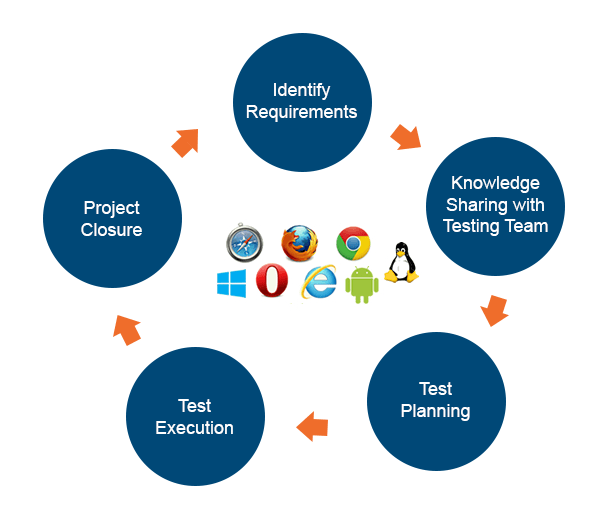
Microsoft described ACT 5 as operating through three broad phases: data collection, data analysis, and testing and mitigation.
Data Collection
The first stage was to discover what applications and systems existed in the environment.
The Application Compatibility Manager could be used to create Data Collection Packages. These packages could be deployed to client computers, where compatibility evaluators collected information that could later be processed centrally.
The practical importance of this approach is straightforward. Administrators cannot reliably evaluate applications they do not know exist.
A hypothetical organization might officially list 250 applications but discover through inventory that users have installed dozens of additional utilities. Those undocumented applications could become deployment risks.
Data Analysis
Once information had been collected, administrators could organize and analyze it.
The objective was not simply to create a large database of application names. The real objective was to identify compatibility risks and determine which applications required additional investigation.
Microsoft’s ACT architecture included an ACT Log Processing Service, an ACT Log Processing Share, an ACT database, and the Application Compatibility Manager.
This architecture allowed compatibility information gathered from client systems to be processed and made available for analysis.
Testing and Mitigation
The final stage involved testing applications and determining how identified problems could be addressed.
Some applications might require no action. Others might need configuration changes, compatibility fixes, a compatibility mode, application updates, or other remediation.
Compatibility Administrator was particularly important for this process because it provided tools for compatibility fixes, compatibility modes, AppHelp messages, and custom compatibility databases.
In my view, this three-stage process is still a useful way to think about application modernization today, even though the specific ACT 5.0 technology is obsolete.
Main Components of Application Compatibility Toolkit 5.0
The toolkit was not simply one executable with one purpose. It consisted of several components that supported different parts of the compatibility lifecycle.
| ACT 5.0 Component | Primary Purpose | Practical Role |
|---|---|---|
| Application Compatibility Manager | Collect and analyze compatibility information | Central planning and analysis |
| Data Collection Package | Gather information from client computers | Application and environment discovery |
| ACT Log Processing Service | Process collected ACT logs | Centralized data processing |
| ACT Database | Store compatibility information | Central repository |
| Compatibility Administrator | Create and manage compatibility fixes | Remediation |
| Standard User Analyzer | Investigate standard-user and UAC-related problems | Application testing |
| Compatibility Evaluators | Collect specific compatibility information | Technical assessment |
| Microsoft Compatibility Exchange | Exchange compatibility information | Shared compatibility knowledge |
The table shows why ACT 5.0 should be understood as a toolkit rather than a single troubleshooting application.
Microsoft’s historical documentation specifically describes the Application Compatibility Manager, Data Collection Package, ACT Log Processing Service, ACT database, and Microsoft Compatibility Exchange as parts of the architecture.
The key takeaway for me is that the architecture attempted to connect discovery with remediation. Administrators could identify an application, collect information about it, analyze potential issues, and then determine an appropriate response.
Application Compatibility Manager and Centralized Analysis
The Application Compatibility Manager, or ACM, was one of the central components of ACT 5.0.
Its purpose was to help administrators collect and analyze compatibility data before deploying a new operating system, changing Internet Explorer versions, or applying certain Windows updates.
I consider centralized analysis particularly important in an enterprise setting because compatibility problems rarely exist in isolation.
Suppose an organization has 50 copies of an accounting application installed across different departments. One computer might have a newer version of a supporting component, while another might have an older configuration. If administrators investigate only the computer where a failure occurs, they may miss the broader pattern.
A centralized compatibility process can reveal whether the issue is widespread or isolated.
This makes compatibility management less reactive and more strategic.
Data Collection Packages and Client Assessment
A Data Collection Package, or DCP, was an executable package created through the Application Compatibility Manager and deployed to client computers. Microsoft explains that a DCP could include one or more compatibility evaluators depending on the assessment scenario.
The idea is relatively simple.
An administrator decides what information needs to be collected, creates the appropriate package, deploys it, and then receives the resulting compatibility information for processing.
For a hypothetical deployment, an IT team could use a collection package across representative machines rather than manually examining every computer one at a time.
That approach could help establish a baseline of applications and compatibility conditions before an operating-system migration.
Compatibility Administrator and Application Fixes
Compatibility Administrator is one of the most recognizable parts of Microsoft’s compatibility technology.
Microsoft documentation explains that Compatibility Administrator can provide compatibility fixes, compatibility modes, and AppHelp messages. It can also be used to create customized compatibility fixes and compatibility databases.
The underlying concept is significant because an application does not always need to be rewritten immediately to address a compatibility problem.
A compatibility layer can sometimes modify how Windows interacts with a particular application.
Microsoft’s compatibility infrastructure uses an application compatibility database with the .sdb extension. The database identifies applications and associated compatibility solutions, and matching occurs using characteristics of the application and its files.
A simplified hypothetical example would look like this:
An older application expects a particular operating-system behavior. The application itself cannot easily be changed because its original developer is no longer maintaining it. An administrator identifies an appropriate compatibility fix and creates a custom compatibility database. The database is then deployed so that Windows applies the required compatibility behavior when the application runs.
This does not mean every legacy application can be rescued this way. I would treat compatibility fixes as targeted remediation rather than a substitute for proper application modernization.
Standard User Analyzer and UAC Compatibility
Another important tool associated with the Application Compatibility Toolkit was Standard User Analyzer, commonly called SUA.
Microsoft documentation explains that SUA could be used to test applications and monitor API calls to identify compatibility issues associated with User Account Control. It could also allow testing under administrator and standard-user conditions.
This mattered because older applications sometimes assumed that users would always have administrative privileges.
Modern Windows security models increasingly encourage least-privilege operation. An application designed around unrestricted access to protected system locations may therefore behave differently when executed by a standard user.
For example, a hypothetical application might attempt to write configuration information into a protected directory. Running it as an administrator might conceal the problem because the operation succeeds. Running it as a standard user could expose the underlying compatibility issue.
I believe this illustrates an important principle: an application that works under administrative privileges is not necessarily fully compatible with a modern Windows security model.
Compatibility Modes and Compatibility Fixes
Compatibility modes attempt to reproduce certain older operating-system behaviors for specific applications.
Microsoft’s documentation describes compatibility modes as a way to disable newer features or emulate particular behavior associated with an earlier Windows API environment.
This is useful when an application depends on a behavior that changed between operating-system versions.
However, I would avoid treating compatibility modes as permanent solutions without testing.
A compatibility mode can help an application run, but it does not necessarily address security weaknesses, unsupported dependencies, obsolete code, or architectural limitations.
The better long-term solution may be to update or replace the application.
The distinction can be summarized as follows:
| Situation | Short-Term Response | Long-Term Consideration |
|---|---|---|
| Application has a minor behavioral conflict | Compatibility fix or mode | Test whether vendor update exists |
| Application requires elevated privileges | Investigate compatibility behavior | Redesign for standard-user operation |
| Application depends on obsolete components | Compatibility workaround | Modernize or replace |
| Application has known Windows-version issue | Targeted mitigation | Upgrade application |
| Application is business-critical and unsupported | Controlled compatibility testing | Develop modernization plan |
| Application cannot be made reliable | Isolation or replacement | Retire legacy dependency |
The most important lesson is that a compatibility fix should be viewed as part of a risk-management strategy, not automatically as the final answer.
What Microsoft Said About Application Compatibility
A verified historical quotation helps explain why compatibility testing mattered during Microsoft’s Windows deployment strategy.
In a 2006 speech discussing the Application Compatibility Toolkit, Microsoft executive Mike Sievert explained the motivation behind releasing ACT 5.0 early in the Windows Vista cycle:
“They’re concerned particularly about user account control.”
Mike Sievert, Microsoft, 2006.
This short quotation matters because UAC was one of the major compatibility considerations during the Windows Vista transition. From my perspective, it demonstrates that compatibility problems were not limited to simple application crashes; changes in security behavior could also affect legacy software.
A second Microsoft statement provides a broader explanation of the toolkit’s purpose. Microsoft described ACT 5.0 as helping organizations determine whether applications were compatible with Windows Vista and how conflicts could be resolved before deployment.
The historical importance is easy to understand. Organizations needed to make migration decisions before moving thousands of users to a new operating system.
A third quotation shows how Microsoft later described the broader compatibility philosophy:
“All apps on Windows devices should just work!”
Mete Goktepe, Microsoft Windows Application Compatibility team.
I find this statement useful because it demonstrates how the compatibility goal evolved beyond a single toolkit. Microsoft later developed broader testing, validation, mitigation, and support programs to maintain application compatibility across Windows releases.
How to Use the ACT 5.0 Methodology for a Legacy Environment
Even though ACT 5.0 itself is obsolete, its methodology can still help someone analyzing a historical Windows environment.
Step 1: Build an Application Inventory
Start by identifying all applications that matter.
Do not limit the inventory to officially supported software. Include business applications, utilities, scripts, internally developed tools, browser dependencies, and other software that users actually rely on.
Step 2: Categorize Applications by Importance
Not every application deserves equal testing effort.
I recommend classifying applications according to business importance, user population, technical complexity, and replacement difficulty.
For example:
- Tier 1: Critical business applications
- Tier 2: Important departmental applications
- Tier 3: Common productivity applications
- Tier 4: Low-impact utilities
- Tier 5: Unused or obsolete applications
This allows testing resources to focus where failure would have the greatest consequences.
Step 3: Identify Compatibility Risks
Look for applications that depend on:
- Administrative privileges
- Older Windows APIs
- Protected file locations
- Registry behavior
- Legacy browser technologies
- Old drivers
- Unsupported frameworks
- 32-bit components
- Deprecated system behavior
- Specialized hardware
This stage should produce a risk register rather than simply a list of application names.
Step 4: Test Representative Applications
Testing should reflect actual usage.
A program that launches successfully but fails when users print reports, access databases, export files, or connect to network resources should not be classified as fully compatible.
I believe functional testing is particularly important for business-critical software.
Step 5: Determine the Remediation Strategy
Possible strategies include:
- Keep the application unchanged
- Apply a compatibility fix
- Configure the environment
- Update the application
- Contact the vendor
- Replace the application
- Retire the application
- Isolate the application in a controlled environment
Step 6: Validate the Solution
A proposed compatibility fix should be tested before broad deployment.
This prevents the common mistake of solving one problem while creating another.
Step 7: Document the Decision
Record why an application was considered compatible, what mitigation was used, who owns the application, and what future action is required.
This documentation becomes particularly valuable when legacy software remains in operation for several years.
Common Problems When Working With Application Compatibility Toolkit 5.0
One of the biggest mistakes is assuming that an old toolkit can simply be installed on a modern Windows computer and expected to behave like a current Microsoft deployment product.
ACT 5.0 was designed for a much older Windows ecosystem.
Microsoft’s current documentation explicitly states that the versions covered by its older ACT documentation are no longer supported. Microsoft also notes that the last supported ACT functionality was included in the Windows 10 Assessment and Deployment Kit.
That means compatibility researchers should distinguish between historical ACT 5.0 documentation and current Microsoft-supported compatibility tooling.
Another common problem is confusing an application that launches with an application that is genuinely compatible.
A successful launch proves very little.
A complete compatibility assessment should consider normal workflows, security permissions, network connectivity, file access, registry behavior, printing, authentication, dependencies, and user privileges.
A third mistake is using compatibility fixes without understanding their scope.
Microsoft’s documentation notes that the 32-bit and 64-bit versions of Compatibility Administrator should be used appropriately when creating and working with custom databases for applications of the corresponding architecture.
Architecture therefore matters when dealing with compatibility databases.
Advantages and Limitations of Application Compatibility Toolkit 5.0
The historical strengths and weaknesses of ACT 5.0 become easier to understand when placed side by side.
| Area | Advantage | Limitation |
|---|---|---|
| Application inventory | Provided structured discovery capabilities | Designed for an older Windows ecosystem |
| Compatibility analysis | Centralized compatibility information | Historical technology |
| Compatibility fixes | Supported targeted remediation | Fixes do not replace modernization |
| Enterprise use | Designed for organizational deployments | Requires substantial administration |
| UAC analysis | Helped identify privilege-related problems | Focused on older Windows compatibility scenarios |
| Compatibility databases | Allowed reusable remediation | Requires technical understanding |
| Deployment planning | Encouraged testing before migration | Not a current Windows 11 management platform |
| Historical research | Useful for understanding legacy Windows deployments | No longer supported as a modern toolkit |
From my perspective, the major advantage was the structured methodology. The major limitation today is its age.
Application Compatibility Toolkit 5.0 Versus Modern Compatibility Practices
The Windows ecosystem has changed dramatically since ACT 5.0.
Microsoft’s later compatibility strategy incorporated additional testing, application inventory, update-readiness information, cloud-assisted analysis, App Assure services, and Test Base for Microsoft 365. Microsoft’s documentation also states that application compatibility tooling was incorporated into the Windows Assessment and Deployment Kit after the older ACT versions were retired.
Modern organizations therefore should not build a new Windows 11 compatibility program around ACT 5.0.
Instead, I would use current Microsoft-supported tools and services appropriate to the organization’s Windows version, deployment architecture, and application portfolio.
The underlying workflow, however, remains surprisingly familiar:
Inventory → Assess → Prioritize → Test → Remediate → Validate → Deploy → Monitor
That continuity is why studying ACT 5.0 still has educational value.
When Application Compatibility Toolkit 5.0 Makes Sense to Study
There are several situations where researching ACT 5.0 remains worthwhile.
Historical Windows Deployment Research
Anyone studying Windows Vista or Windows 7 migration strategies may encounter ACT 5.0 in deployment documentation.
Legacy Application Analysis
Organizations maintaining historical systems may encounter ACT terminology, compatibility databases, .sdb files, or old remediation documentation.
IT Certification and Technical Education
ACT 5.0 can illustrate concepts such as compatibility shims, application inventories, UAC-related compatibility problems, and deployment readiness.
Understanding Microsoft’s Compatibility Evolution
The toolkit provides a useful historical reference point for understanding how Microsoft moved from desktop compatibility utilities toward broader compatibility services and cloud-assisted deployment practices.
When ACT 5.0 Should Not Be Used as a Modern Solution
I would be particularly cautious about using ACT 5.0 for a new Windows deployment.
Microsoft states that the older ACT versions are no longer supported.
If the goal is to prepare an organization for a current Windows release, the correct approach is to research Microsoft’s current compatibility and deployment tooling rather than relying on an unsupported historical package.
This distinction is especially important for security-sensitive environments.
An unsupported compatibility tool may itself introduce installation, dependency, maintenance, or operational challenges.
The fact that a tool can still be found in an old software archive does not mean that it is appropriate for a current production environment.
How to Evaluate a Legacy Application Today
If I were designing a modern compatibility assessment based on the principles demonstrated by ACT 5.0, I would begin with business requirements rather than software versions.
First, I would determine which applications are genuinely required.
Next, I would identify the application’s owner, vendor status, dependencies, architecture, authentication requirements, and security profile.
Then I would test the application in an environment that represents the target Windows configuration.
A useful decision model would look like this:
| Assessment Result | Recommended Direction | Reason |
|---|---|---|
| Fully compatible | Deploy normally | No significant remediation identified |
| Minor compatibility issue | Apply tested configuration | Low-risk remediation |
| Compatibility fix available | Test and document fix | Controlled workaround |
| Vendor update available | Upgrade application | Prefer supported software |
| Unsupported but essential | Isolate and create modernization plan | Reduce long-term dependency |
| Severe compatibility failure | Replace or retire | Avoid deployment risk |
| Unknown behavior | Conduct additional testing | Evidence is insufficient |
The key principle is that uncertainty should not automatically be classified as compatibility.
If the testing evidence is incomplete, the correct classification is unknown.
Expert Recommendations for Application Compatibility Planning
In my view, the first recommendation is to avoid starting with the tool.
Start with the application portfolio.
The second recommendation is to prioritize business-critical applications. Testing a rarely used utility for ten hours while spending only twenty minutes on a mission-critical accounting system is poor allocation of resources.
Third, test normal user privileges.
Compatibility testing performed only under administrative credentials can hide problems related to permissions and UAC.
Fourth, document every workaround.
A compatibility fix that works today but has no owner or documentation can become another legacy problem tomorrow.
Fifth, distinguish temporary remediation from permanent modernization.
If a compatibility shim allows a ten-year-old application to operate, that may be useful. But it does not necessarily mean the application should remain unchanged indefinitely.
Finally, I recommend treating application compatibility as an ongoing process rather than a single migration event.
Microsoft’s more recent compatibility strategy reinforces this idea by emphasizing continuous validation and testing across Windows releases.
The Long-Term Lesson From Application Compatibility Toolkit 5.0
When I look at ACT 5.0 from a historical perspective, I see an important lesson about enterprise technology management.
Operating-system migration is not simply an operating-system project.
It is an application portfolio project.
A Windows deployment can be technically successful while still causing business disruption if critical applications fail.
ACT 5.0 attempted to solve that problem by bringing inventory, analysis, testing, compatibility information, and remediation into a more organized process.
The exact tools have changed, but the underlying challenge remains.
Modern operating systems continue to introduce security improvements, architectural changes, API changes, browser changes, and new deployment models. Applications must therefore be evaluated against the environment in which they will operate.
I believe the strongest lesson is that organizations should replace assumptions with evidence.
Instead of saying, “This application is old, so it probably will not work,” or “It launched successfully, so everything is fine,” a better approach is to collect evidence, test important workflows, identify risks, and document the decision.
That principle is just as relevant today as it was when ACT 5.0 was introduced.
What Happened to Application Compatibility Toolkit 5.0?
Application Compatibility Toolkit 5.0 belongs to an older generation of Microsoft’s application compatibility tools. It was released in the Windows Vista era, and later ACT versions expanded the toolkit’s capabilities.
Microsoft’s current documentation makes clear that the older ACT versions are no longer supported and identifies the Windows 10 Assessment and Deployment Kit as containing the last supported version of the ACT functionality described in that documentation.
This is an important distinction for people searching for “Application Compatibility Toolkit 5.0 download.”
Finding an old installer does not mean the software is currently supported or suitable for modern Windows systems.
If someone is researching ACT 5.0 for historical purposes, the old documentation can be valuable. If the objective is current application compatibility testing, I would instead investigate Microsoft’s current Windows deployment and compatibility technologies.
Why Application Compatibility Still Matters
Application compatibility has not disappeared simply because the tools have changed.
Microsoft continues to describe application compatibility as an important part of Windows deployment. Its current compatibility approach includes automated testing, manual validation, application inventory, compatibility investigations, and remediation assistance.
This confirms something I consider fundamental: application compatibility is an ongoing engineering and deployment concern.
The more complicated an organization’s application environment becomes, the more important structured testing becomes.
A modern organization might have desktop applications, browser applications, cloud services, legacy databases, custom business applications, mobile integrations, security software, and specialized utilities. Any operating-system change can potentially affect part of that ecosystem.
Therefore, the philosophy behind ACT 5.0 remains relevant even though the software itself is obsolete.
Conclusion
From my perspective, Application Compatibility Toolkit 5.0 is best understood as an important historical Microsoft technology for managing application compatibility during the Windows Vista era. Its purpose was not simply to find applications that crashed. It provided a broader framework for discovering applications, collecting compatibility information, analyzing risks, testing behavior, and applying targeted remediation.
I believe the most valuable lesson from Application Compatibility Toolkit 5.0 is the structured compatibility lifecycle it represented. Organizations should inventory applications, identify business-critical software, test real workflows, investigate privilege and dependency problems, document compatibility decisions, and distinguish temporary workarounds from long-term modernization.
The toolkit itself is no longer a supported solution, so I would not recommend building a current Windows deployment around it. Microsoft has moved its compatibility capabilities into newer deployment and assessment technologies.
For readers researching legacy Windows environments, however, ACT 5.0 remains useful for understanding how Microsoft approached application readiness. My practical recommendation is to use its methodology as a learning framework while relying on currently supported tools for modern deployments.
Frequently Asked Questions
What is Application Compatibility Toolkit 5.0?
Application Compatibility Toolkit 5.0 was a Microsoft toolkit designed to help organizations identify and resolve application compatibility problems during Windows deployment, particularly around the Windows Vista era. It provided tools for application discovery, compatibility data collection, analysis, testing, and remediation. Microsoft described ACT as a lifecycle management technology for reducing the time and cost associated with compatibility problems.
Is Application Compatibility Toolkit 5.0 still supported?
No. Microsoft states that the older Application Compatibility Toolkit versions covered by its legacy documentation are no longer supported. Microsoft identifies the Windows 10 Assessment and Deployment Kit as containing the last supported version of the ACT functionality described in that documentation.
What was Compatibility Administrator used for?
Compatibility Administrator was used to identify and create application compatibility fixes, compatibility modes, AppHelp messages, and custom compatibility databases. It could also be used to search for existing compatibility fixes. Microsoft documentation describes it as a tool for addressing potential application compatibility issues before deploying a new Windows version.
What is a compatibility shim?
A compatibility shim is a mechanism that can alter or adapt application behavior so that an older application can operate correctly under a newer Windows environment. Compatibility shims can provide targeted workarounds for certain application behaviors. I would treat them as controlled compatibility mechanisms rather than automatic replacements for updating outdated software.
What was Standard User Analyzer used for?
Standard User Analyzer was designed to test applications and monitor behavior associated with User Account Control and standard-user operation. Microsoft explains that the tool could help identify compatibility issues by testing applications under administrator and standard-user conditions.
Can Application Compatibility Toolkit 5.0 be used with Windows 11?
I would not recommend using ACT 5.0 as a modern Windows 11 compatibility solution. The toolkit belongs to an older generation of Microsoft compatibility technologies, and the older ACT versions are no longer supported. Current Windows deployment projects should use Microsoft’s supported compatibility and assessment technologies instead.
What is an SDB compatibility database?
An SDB file is an application compatibility database used by Windows compatibility infrastructure. Microsoft documentation explains that the database contains application compatibility information and solutions, with matching performed against application and file characteristics.
Why was application compatibility important for Windows Vista?
Application compatibility was important because operating-system changes could affect existing applications, particularly applications that depended on older security, API, file-system, registry, or privilege behavior. Microsoft released ACT 5.0 to help organizations identify and address these issues before deploying Windows Vista.
Should I use an old ACT 5.0 installer today?
I would not use an old ACT 5.0 installer as the foundation of a new production compatibility program. It can be useful for historical research or understanding legacy Windows deployments, but Microsoft no longer supports the older toolkit versions. For current deployments, I recommend using supported Microsoft assessment and compatibility technologies.
Sources and References
Microsoft documentation and publications consulted for this article include Microsoft’s historical Application Compatibility Toolkit documentation, Microsoft Learn documentation for Compatibility Administrator and Standard User Analyzer, Microsoft Community Hub material describing ACT 5 architecture, and Microsoft’s historical announcements concerning ACT 5.0.
Additional context was reviewed from Microsoft’s Windows application compatibility materials describing modern compatibility validation, testing, and remediation practices.
Disclaimer
This article is provided for general informational and educational purposes. Application Compatibility Toolkit 5.0 is a legacy Microsoft technology, and its availability, compatibility, documentation, and support status may differ from current Microsoft products. I recommend verifying current Microsoft documentation and supported deployment requirements before using any compatibility technology in a production environment. Compatibility behavior can also vary according to the Windows version, application architecture, configuration, dependencies, security settings, and organizational environment.