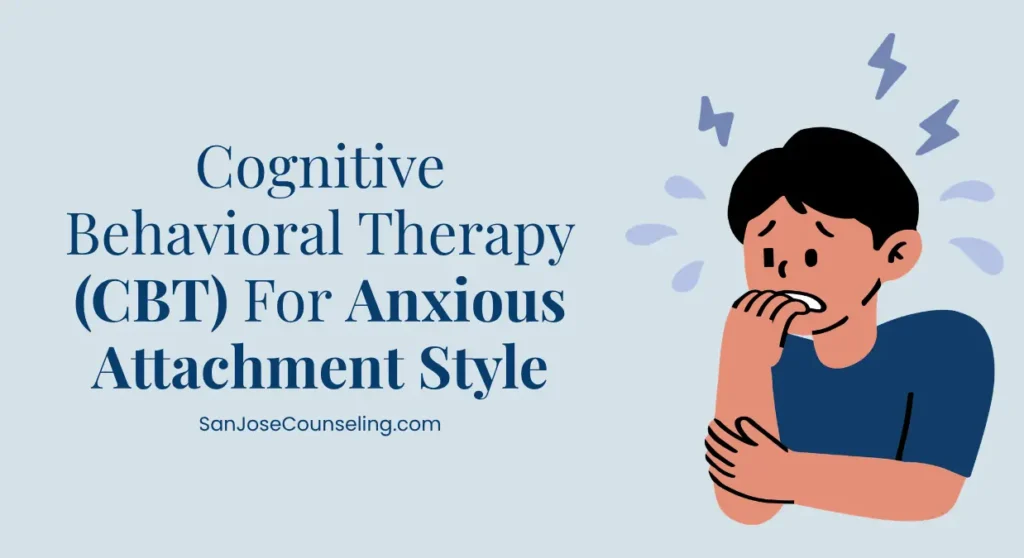
I believe finding the right therapist for anxious attachment style can be an important step for people who regularly experience fear of rejection, abandonment concerns, relationship anxiety, or a strong need for reassurance. I do not view anxious attachment as a permanent label or a character flaw. Instead, I see it as one possible framework for understanding recurring emotional and relationship patterns.
A person experiencing attachment anxiety may become highly alert to changes in another person’s behavior. A delayed text message, a shorter conversation, a disagreement, or a request for personal space can sometimes feel much more threatening than the available evidence suggests. The resulting anxiety may lead to repeated reassurance-seeking, overthinking, emotional withdrawal, excessive communication, or difficulty concentrating on other parts of life.
From my perspective, the goal of therapy should not be to eliminate a person’s need for connection. Human beings naturally need meaningful relationships. Instead, therapy can help people develop greater flexibility in how they respond to uncertainty, communicate their needs, manage emotional reactions, and evaluate relationships realistically.
The phrase “therapist for anxious attachment style” can describe several different kinds of mental-health professionals and therapeutic approaches. I would therefore avoid choosing someone simply because their profile contains attachment-related keywords. Professional qualifications, relevant experience, therapeutic approach, ethical boundaries, communication style, and personal fit are all important.
When we approach the subject this way, attachment becomes a useful framework rather than a rigid identity.
Key Takeaways
When I consider how someone should choose a therapist for anxious attachment style, I would focus on the following points:
- Anxious attachment is generally understood as an attachment pattern or dimension rather than a standalone mental-health diagnosis.
- Attachment anxiety can involve fear of abandonment, heightened sensitivity to rejection, reassurance-seeking, and difficulty tolerating relationship uncertainty.
- Not every relationship problem is caused by anxious attachment.
- A therapist should consider the person’s current circumstances as well as their relationship history.
- Attachment-informed therapy can be combined with other therapeutic approaches.
- Cognitive-behavioral therapy may be useful when worry, catastrophic thinking, or repetitive behaviors are prominent.
- Psychodynamic therapy may help people explore recurring interpersonal patterns.
- Emotion-focused approaches can be relevant when emotional communication and relationship dynamics are central concerns.
- Couples therapy may be appropriate when relationship difficulties involve both partners and both people are willing to participate.
- A good therapist should encourage autonomy rather than emotional dependence.
- Professional credentials and ethical boundaries should be checked before beginning ongoing treatment.
- Progress should be discussed periodically instead of assuming therapy will automatically work simply because the therapist specializes in attachment.
I believe the most useful question is not simply, “Does this therapist treat anxious attachment?” It is, “Can this therapist understand my particular difficulties and help me work toward realistic goals?”
Understanding Anxious Attachment Style
Attachment theory developed from research concerning emotional bonds between children and caregivers and later became an influential framework for understanding adult relationships. John Bowlby’s work was especially important in establishing attachment as a central part of human emotional development.
Adult attachment research has since become much broader. Researchers examine attachment-related anxiety and avoidance, relationship functioning, emotional regulation, stress responses, and mental health.
Anxious attachment is often associated with heightened concern about whether important relationships are secure. Someone may strongly desire closeness while simultaneously worrying that the other person will leave, lose interest, or become emotionally unavailable.
I think it is important to avoid turning this concept into a rigid personality category. People can show different attachment-related behaviors in different relationships and circumstances. Someone may feel very secure with one person but experience considerable anxiety in another relationship.
Stress can also change how attachment-related patterns appear.
For example, imagine a hypothetical person who normally feels comfortable in a relationship. Their partner suddenly becomes unusually busy for several days. The person begins wondering whether something is wrong. After several hours without a response, they start imagining that the relationship is ending.
The first thought may lead to anxiety. Anxiety may lead to checking the phone repeatedly. Checking may increase attention toward every small change in communication. Eventually, the person may send several messages seeking reassurance.
The important issue is not simply that the person wanted reassurance. The therapist may examine the entire sequence:
Trigger → interpretation → emotional reaction → behavior → consequence
Understanding that cycle can create opportunities for change.
How Attachment Anxiety Can Affect Relationships
Attachment anxiety can influence relationships in several ways, although the exact experience differs from person to person.
One person may become highly focused on whether their partner is emotionally available. Another may have difficulty expressing disagreement because they fear conflict will lead to rejection. Someone else may repeatedly ask whether the relationship is secure.
There can also be a tendency to interpret ambiguous behavior negatively.
Suppose a partner says, “I need some time to myself tonight.”
One interpretation might be, “They had a stressful day and need some quiet time.”
Another interpretation might be, “They do not love me anymore.”
The words are identical, but the emotional meaning is completely different.
Therapy can help examine how interpretations are formed and whether they accurately reflect the available evidence.
I believe this is one reason a therapist should avoid simply telling a client to “stop being anxious.” Anxiety usually has a function. The person may be trying to protect an important relationship or prevent emotional pain.
The therapeutic task can involve finding healthier ways to accomplish those underlying goals.
What a Therapist for Anxious Attachment Style Can Help With
A therapist for anxious attachment style may help a person understand recurring relationship patterns, emotional triggers, beliefs about closeness, and behaviors used to manage uncertainty.
The exact treatment depends on the person’s circumstances.
Recognizing Emotional Triggers
The first step may involve identifying situations that reliably activate anxiety.
These can include:
- Delayed communication
- Arguments
- Dating uncertainty
- Changes in intimacy
- A partner requesting space
- Perceived rejection
- Breakups
- Relationship ambiguity
- Criticism
- Fear of being replaced
- Changes in a partner’s routine
Identifying triggers does not mean assuming that the person’s interpretation is wrong. Sometimes a partner really is behaving inconsistently or disrespectfully.
The therapist should therefore examine both the internal reaction and the external circumstances.
Understanding Reassurance-Seeking
Reassurance is a normal part of healthy relationships. People naturally comfort one another.
The difficulty may arise when reassurance becomes the primary way someone regulates anxiety.
For example, a person might repeatedly ask, “Are you sure everything is okay?”
Their partner reassures them. The anxiety temporarily decreases.
Later, the same uncertainty returns.
The person asks again.
Over time, this pattern can become exhausting for both people.
Therapy may help the person communicate legitimate needs while also developing additional ways to handle uncertainty.
Improving Emotional Regulation
Emotional regulation does not mean suppressing emotions.
Instead, it can involve recognizing emotional activation, understanding what triggered it, pausing before reacting, and choosing a response that matches the situation.
Someone who previously sent ten messages during a period of uncertainty might eventually learn to pause, identify the fear, assess the evidence, and decide whether one clear message is enough.
That is not emotional detachment.
It is greater behavioral flexibility.
Developing Healthier Boundaries
People with relationship anxiety can sometimes become so focused on maintaining closeness that they ignore their own boundaries.
A person might tolerate repeated disrespect because they fear losing the relationship.
I believe therapy should address this directly.
Healthy attachment is not about keeping every relationship intact at any cost. It also involves recognizing when a relationship is supportive, reciprocal, respectful, and emotionally safe.
Therapeutic Approaches That May Be Relevant
There is no single therapy that should automatically be prescribed to everyone who identifies with anxious attachment.
Different approaches may address different needs.
Attachment-Informed Therapy
Attachment-informed therapy uses attachment concepts to understand interpersonal and emotional patterns.
The therapist may explore early relationships, current relationship expectations, emotional responses to closeness and distance, and recurring interpersonal behaviors.
Attachment theory can provide useful language for understanding why certain situations feel particularly threatening.
However, I would be cautious about therapists who claim that attachment explains everything. A person’s current environment, temperament, relationships, social circumstances, stress, and mental health can all matter.
Cognitive-Behavioral Therapy
Cognitive-behavioral therapy, commonly known as CBT, can be useful when anxious attachment is accompanied by excessive worry, catastrophic interpretations, avoidance, or repetitive reassurance-seeking.
A therapist might help someone examine thoughts such as:
“If they do not reply immediately, they must be leaving me.”
“If we disagree, our relationship is over.”
“If I do not keep them happy, they will abandon me.”
The goal is not to replace every negative thought with a positive one. Instead, therapy can encourage more balanced and evidence-based interpretations.
Psychodynamic Therapy
Psychodynamic approaches may explore recurring emotional and interpersonal patterns.
For someone who repeatedly becomes involved with emotionally unavailable partners, therapy may examine what feels familiar about those relationships and how expectations influence partner selection.
This type of work can be especially relevant for people interested in understanding long-standing patterns rather than focusing only on immediate symptoms.
Emotion-Focused Approaches
Emotion-focused approaches can help people identify, understand, and communicate emotions.
Emotionally Focused Therapy has also been used with couples to address relationship dynamics and attachment-related concerns.
Research has examined changes in attachment anxiety and avoidance during Emotionally Focused Therapy and found associations between attachment changes and relationship satisfaction.
I would still avoid presenting one study as proof that every person with anxious attachment should receive this particular treatment. Research findings need to be interpreted in context.
Interpersonal Therapy
Interpersonal approaches focus heavily on relationships, communication, interpersonal conflicts, grief, and major changes in social roles.
This can make them relevant for someone whose anxiety is strongly connected to relationships.
The therapist may help the client recognize communication patterns and practice healthier ways of expressing needs.
What Should I Look for in a Therapist?
When searching for a therapist for anxious attachment style, I would first verify professional qualifications.
Depending on the country and professional system, appropriate clinicians may include psychologists, psychiatrists, licensed counselors, clinical social workers, marriage and family therapists, or other regulated mental-health professionals.
After credentials, I would examine the therapist’s experience.
A therapist does not necessarily need to advertise themselves as an “attachment specialist.” What matters is whether they understand the concerns you want to address.
For example, someone experiencing relationship anxiety and panic symptoms may benefit from a therapist who understands both attachment concepts and evidence-based anxiety treatment.
Someone experiencing recurring relationship conflicts may want a clinician with interpersonal or couples experience.
Someone dealing with trauma-related symptoms may need a therapist with appropriate trauma-focused training.
Questions to Ask a Potential Therapist
Before beginning regular sessions, I would consider asking:
- What experience do you have working with relationship anxiety?
- How do you use attachment theory in therapy?
- Which therapeutic approaches do you use?
- How would you approach fear of abandonment?
- How do you work with repetitive reassurance-seeking?
- How do you measure progress?
- What are your policies for communication between sessions?
- How do you maintain professional boundaries?
- What happens if I feel that therapy is not helping?
- Do you work with anxiety, depression, trauma, or other concerns that may occur alongside relationship difficulties?
The therapist’s answers can provide useful information about their treatment philosophy.
Comparing Important Therapist Selection Factors
The following table summarizes the qualities I would compare before choosing a therapist.
| Factor | What I Would Look For | Why It Matters |
|---|---|---|
| Professional credentials | Appropriate licensing or recognized qualification | Establishes professional accountability |
| Attachment knowledge | Understanding of adult attachment research | Provides a relevant framework |
| Treatment approach | Clear explanation of therapeutic methods | Helps determine treatment fit |
| Relationship experience | Experience with interpersonal concerns | Useful when problems center on relationships |
| Anxiety experience | Ability to treat significant anxiety | Attachment concerns may coexist with anxiety |
| Boundaries | Clear communication and session policies | Protects a healthy therapeutic relationship |
| Progress tracking | Defined goals and periodic reviews | Helps determine whether therapy is useful |
| Communication | Respectful and understandable explanations | Supports collaboration |
| Accessibility | Reasonable scheduling and practical access | Consistency can affect treatment |
| Crisis planning | Clear procedures for urgent situations | Routine therapy cannot replace emergency care |
The most important lesson from this table is that attachment knowledge is only one factor. I would place professional competence, ethical practice, treatment fit, and communication alongside attachment experience.
How Therapy May Address Anxious Attachment Step by Step
Therapy does not follow one universal sequence, but we can describe a general process.
Step 1: Identify the Main Difficulty
The therapist first needs to understand why the person is seeking help.
The concern might be repeated relationship conflict, dating anxiety, fear of abandonment, difficulty trusting others, or emotional distress after a breakup.
A useful treatment plan begins with a clear problem rather than a label.
Step 2: Identify the Trigger
The therapist may ask what situations cause the strongest emotional reactions.
A person might notice that anxiety is especially strong when a partner becomes unavailable.
Step 3: Identify the Interpretation
Next, the therapist may explore what the person believes the situation means.
The thought might be:
“They are losing interest.”
“They are going to leave.”
“I am not important.”
This step can be extremely useful because the interpretation often determines the intensity of the emotional response.
Step 4: Identify the Behavioral Response
The person may then identify what they do when anxiety appears.
Possible behaviors include:
- Repeated texting
- Constantly checking messages
- Asking for reassurance
- Testing a partner’s feelings
- Becoming overly accommodating
- Starting arguments
- Withdrawing
- Monitoring social media
- Avoiding difficult conversations
Step 5: Examine the Consequences
Some behaviors reduce anxiety temporarily but create problems later.
Repeated reassurance may provide immediate relief but increase dependence on external confirmation.
Avoiding communication may prevent immediate conflict but leave important issues unresolved.
The therapist can help examine these short-term and long-term consequences.
Step 6: Practice Alternative Responses
The final stage may involve developing healthier responses.
A person might learn to communicate directly rather than testing a partner, tolerate uncertainty for longer, or recognize when an emotional reaction is stronger than the evidence warrants.
Over time, these alternative behaviors can become easier to use.
A Hypothetical Example of Anxious Attachment Therapy
Consider a hypothetical person named Daniel.
Daniel begins a new relationship and becomes emotionally invested quickly. When his partner takes several hours to respond to a message, he becomes convinced that something is wrong.
He sends another message.
Then another.
When the partner finally responds, Daniel feels immediate relief.
The next week, the same situation happens.
A therapist might help Daniel map the cycle.
The trigger is delayed communication.
The interpretation is that the partner is losing interest.
The emotional response is fear.
The behavioral response is repeated messaging.
The immediate consequence is temporary relief.
The long-term consequence may be increased anxiety and relationship tension.
Therapy could help Daniel consider other explanations, recognize the physical signs of anxiety, tolerate uncertainty, communicate directly, and continue engaging with other areas of life while waiting for a response.
This is a hypothetical illustration rather than a real clinical case.
I believe the example demonstrates an important point: therapy does not necessarily attempt to convince someone that their feelings are meaningless. Instead, it can help them respond to those feelings with greater flexibility.
The Importance of the Therapeutic Relationship
Attachment-informed therapy gives particular attention to the relationship between therapist and client.
This can be especially meaningful for someone who fears rejection or abandonment.
A client may worry that a therapist is disappointed in them after they miss an appointment. Another client may feel rejected when a session ends.
These experiences can sometimes provide opportunities to examine relationship expectations.
However, the therapist must maintain professional boundaries.
A therapist should not become a replacement romantic partner, unrestricted source of emotional reassurance, or substitute for the client’s broader support system.
Healthy therapy should ultimately encourage autonomy.
John Bowlby’s work emphasized the importance of secure relationships and emotional connection. One of his widely cited observations describes attachment figures as a foundation from which people can explore.
“All of us, from the cradle to the grave, are happiest when life is organized as a series of excursions, long or short, from the secure base provided by our attachment figures.”
John Bowlby, A Secure Base.
I find this quotation useful because it challenges the idea that emotional security and independence are opposites. A secure relationship can support exploration rather than prevent it.
How Research Helps Us Understand Attachment and Therapy
Research provides useful evidence, but I believe it should be interpreted carefully.
A meta-analysis examining adult attachment and mental-health outcomes found meaningful relationships between attachment anxiety and negative mental-health indicators. The researchers also emphasized that attachment is only one part of a much larger psychological picture.
Research examining psychotherapy has similarly found that attachment security can be associated with therapy outcomes.
One meta-analysis of psychotherapy studies found that greater attachment security before treatment and increases in attachment security during treatment were associated with better outcomes.
These findings do not mean that every person with anxious attachment needs attachment-focused therapy.
They also do not prove that attachment anxiety is the cause of another mental-health condition.
Instead, the research suggests that interpersonal security can be clinically meaningful.
A second quotation from Bowlby illustrates another important idea about emotional experience and communication:
“What cannot be communicated to the mother cannot be communicated to the self.”
John Bowlby, A Secure Base.
I interpret this as highlighting the potential importance of putting difficult emotional experiences into words. Therapy can provide a structured environment where a person gradually learns to identify and communicate experiences that previously felt confusing.
When Couples Therapy May Be Appropriate
Individual therapy is not always the only option.
If the main difficulty occurs inside a current romantic relationship, couples therapy may sometimes be appropriate.
Imagine a hypothetical couple in which one partner becomes anxious and pursues closeness whenever conflict appears. The other partner feels overwhelmed and withdraws.
The first partner interprets withdrawal as abandonment.
The second partner interprets pursuit as pressure.
Each reaction strengthens the other.
This creates a cycle.
An attachment-informed couples therapist may help the couple recognize the cycle and develop more constructive ways of communicating.
Research on Emotionally Focused Therapy has examined relationship-specific attachment changes and found associations between reductions in attachment anxiety and avoidance and improvements in relationship satisfaction.
However, couples therapy is not appropriate for every situation.
If a relationship involves serious abuse, coercive control, threats, or significant safety concerns, specialized support and safety planning may be more appropriate than conventional couples therapy.
Common Misconceptions About Anxious Attachment
One common misconception is that anxious attachment means someone is simply “needy.”
I believe this language is often too simplistic.
People have legitimate needs for affection, closeness, reassurance, and emotional support. The important question is whether those needs are being communicated and managed in healthy ways.
Another misconception is that childhood explains everything.
Early relationships can influence attachment expectations, but adult relationships are shaped by many factors. Current circumstances, later experiences, personality, social environment, stress, and relationship quality can all matter.
A third misconception is that secure attachment means never needing anyone.
That is not how I understand healthy attachment.
A person can be emotionally connected to others while also maintaining boundaries, independence, friendships, interests, and personal goals.
Another mistake is assuming that all anxiety comes from inside the anxious person.
Sometimes a partner really is inconsistent, dishonest, dismissive, or emotionally unavailable.
Therapy should help distinguish between internal fears and legitimate concerns about another person’s behavior.
When a Broader Mental-Health Assessment May Be Needed
Attachment concerns can occur alongside other psychological difficulties.
Someone may experience relationship anxiety while also dealing with generalized anxiety, depression, social anxiety, trauma-related symptoms, obsessive behaviors, or other concerns.
In such situations, I would not recommend focusing exclusively on attachment.
A comprehensive assessment may help identify the full range of difficulties.
This is especially important if symptoms significantly interfere with work, education, sleep, daily functioning, or relationships.
A qualified mental-health professional can determine whether additional treatment is appropriate.
If someone is experiencing thoughts of suicide, immediate danger, severe psychiatric symptoms, or another urgent crisis, routine therapist selection should not be the only response. Immediate crisis or emergency support may be necessary.
How to Recognize Healthy Therapy Boundaries
Healthy boundaries are particularly important when attachment anxiety is part of the reason someone enters therapy.
A therapist may have specific rules regarding appointment times, cancellations, between-session contact, and emergencies.
Those boundaries are not necessarily evidence that the therapist is emotionally unavailable.
In fact, predictable boundaries can help create a stable therapeutic environment.
I would be cautious if a therapist encourages excessive dependence, suggests that the client cannot cope without them, discourages outside relationships, or uses emotional pressure to maintain the therapeutic relationship.
Therapy should ideally increase a person’s ability to function independently and participate in healthy relationships.
The goal is not to create another relationship in which the client constantly fears abandonment.
The goal is to help the person develop greater internal stability and healthier interpersonal patterns.
Practical Checklist for Choosing a Therapist
I would use this checklist before committing to regular therapy:
- Verify the therapist’s professional credentials.
- Review their stated areas of experience.
- Ask how they approach attachment-related concerns.
- Explain your primary relationship or emotional difficulties.
- Ask which therapeutic methods they use.
- Discuss treatment goals.
- Ask how progress will be evaluated.
- Clarify communication and emergency policies.
- Consider cost and scheduling.
- Pay attention to whether you feel respected and understood.
- Give yourself permission to discuss concerns about the therapy itself.
- Consider another therapist if the treatment relationship consistently feels unsuitable.
Finding a therapist can take time, and I do not think a person should interpret an unsuccessful first match as evidence that therapy cannot help.
Therapeutic fit matters.
Comparing Therapist Approaches by Primary Concern
Different problems call for different priorities. This table can help clarify what type of experience may be useful.
| Main Concern | Therapist Experience to Prioritize | Potential Focus |
|---|---|---|
| Fear of abandonment | Attachment and relationship experience | Emotional security and relationship patterns |
| Reassurance-seeking | Anxiety and behavioral treatment | Worry and uncertainty tolerance |
| Repeated relationship conflict | Interpersonal or couples experience | Communication and conflict cycles |
| Long-term relationship patterns | Psychodynamic or attachment-informed experience | Recurring expectations and behaviors |
| Anxiety plus relationship concerns | Anxiety and attachment knowledge | Anxiety symptoms and relationship triggers |
| Couple-specific problems | Couples therapy experience | Mutual relationship patterns |
| Trauma and relationship anxiety | Trauma-informed experience | Safety, emotional regulation, and trauma symptoms |
| Depression and relationship problems | Mood-disorder treatment experience | Mood symptoms and interpersonal functioning |
| Multiple overlapping concerns | Broad assessment experience | Comprehensive treatment planning |
| Immediate crisis | Crisis or emergency services | Safety and stabilization |
The table shows why I would not search only by the phrase “anxious attachment therapist.” The best match depends on the actual problem that needs attention.
What Progress Can Look Like
Progress does not necessarily mean never feeling anxious again.
A person may still experience uncertainty but respond differently.
For example, someone who previously spent an entire evening checking their phone might notice the anxiety, acknowledge it, and return to another activity.
Someone who previously avoided expressing needs might communicate directly.
Someone who previously accepted disrespect because they feared abandonment might recognize that their relationship needs include mutual respect.
Someone who previously interpreted every disagreement as a sign of rejection might learn to distinguish conflict from relationship collapse.
I believe these changes are more meaningful than simply trying to achieve a particular attachment label.
Progress can also include better awareness.
A person might begin noticing:
“I am feeling rejected, but I do not yet know that I have been rejected.”
That distinction creates psychological space.
Final Practical Recommendations
From my perspective, the strongest approach is to treat attachment as a starting point for exploration rather than a final diagnosis.
If relationship anxiety is causing significant distress, I would look for a qualified mental-health professional with experience relevant to the actual symptoms and relationship concerns.
During an initial consultation, ask about their approach, experience, boundaries, and treatment goals.
Do not be afraid to explain that you want to understand attachment patterns without assuming that every problem comes from attachment.
I also believe it is important to evaluate the quality of the relationship you are currently in. Therapy should not automatically convince someone that their partner’s behavior is acceptable. Emotional security involves both internal regulation and realistic evaluation of other people’s actions.
Finally, give therapy enough time for a genuine assessment while remaining willing to discuss whether treatment is helping.
A good therapist should be able to work collaboratively rather than presenting themselves as the sole authority over your relationships.
Conclusion
I believe choosing a therapist for anxious attachment style is most useful when the focus stays on the person’s actual needs rather than on a psychological label alone. Attachment anxiety can help explain patterns involving fear of abandonment, reassurance-seeking, relationship uncertainty, and emotional reactivity, but it does not explain every relationship problem or every mental-health concern.
In my view, effective therapy should help a person understand emotional triggers, examine interpretations, regulate difficult feelings, communicate needs, establish boundaries, and make healthier relationship decisions. Different therapeutic approaches may be appropriate depending on whether the primary concern involves anxiety, recurring relationship patterns, trauma, communication difficulties, or couple conflict.
My practical recommendation is to identify qualified therapists, ask how they approach attachment-related concerns, and compare their qualifications, methods, boundaries, and communication style. I would choose someone who encourages understanding and autonomy rather than dependence. The goal is not to become someone who never needs reassurance or connection. The goal is to develop enough security and flexibility to experience closeness without allowing fear to control every relationship decision.
Frequently Asked Questions
What does a therapist for anxious attachment style help with?
A therapist for anxious attachment style can help people understand fear of abandonment, relationship uncertainty, reassurance-seeking, emotional reactivity, and recurring interpersonal patterns. Treatment may include attachment-informed therapy along with CBT, psychodynamic therapy, interpersonal approaches, or emotion-focused methods. The therapist should first understand the person’s specific difficulties rather than assuming that attachment explains everything. Therapy may also address anxiety, depression, trauma, communication problems, or other concerns that occur alongside relationship difficulties.
Can therapy change anxious attachment style?
Therapy can help people develop healthier and more flexible responses to attachment-related fears. Research has found associations between increases in attachment security during psychotherapy and improved treatment outcomes, although this does not mean therapy guarantees a particular attachment style. I believe a better goal is often to improve emotional regulation, communication, boundaries, relationship choices, and tolerance of uncertainty. A person may still experience attachment-related anxiety occasionally while becoming much more capable of responding to it constructively.
How do I find a therapist for anxious attachment style?
Start by looking for an appropriately qualified mental-health professional who understands adult relationships and has experience with anxiety or attachment-related concerns. Ask about professional credentials, therapeutic methods, experience with fear of abandonment and reassurance-seeking, treatment goals, boundaries, and progress measurement. I would compare several potential therapists when possible instead of choosing solely because someone uses the phrase “attachment specialist.” The best choice is generally the professional whose approach matches your needs and with whom you can communicate comfortably.
Is anxious attachment a mental-health diagnosis?
Anxious attachment is generally considered an attachment pattern or dimension rather than a standalone psychiatric diagnosis. Someone can experience attachment anxiety without having a mental-health disorder. At the same time, attachment anxiety may occur alongside anxiety, depression, social anxiety, trauma-related difficulties, or other concerns. This is why I believe professional assessment should focus on the complete situation rather than relying on an online attachment quiz or social-media description.
Can anxious attachment cause reassurance-seeking?
Anxious attachment can be associated with heightened concern about relationship security and repeated attempts to obtain reassurance. However, reassurance itself is not unhealthy. Partners naturally reassure each other. The problem may arise when reassurance becomes repetitive, difficult to resist, or provides only temporary relief. Therapy can help a person communicate legitimate emotional needs while also learning other ways to manage uncertainty and regulate anxiety.
Should I choose individual therapy or couples therapy?
The appropriate format depends on the source of the difficulty. Individual therapy may be useful when anxiety, emotional regulation, relationship expectations, or recurring patterns are the primary concerns. Couples therapy may be appropriate when both partners are willing to work on a recurring relationship cycle. If the relationship includes abuse, coercion, threats, or significant safety concerns, specialized individual support and safety planning may be more appropriate than conventional couples therapy.
How long does therapy for anxious attachment take?
There is no universal timeframe for therapy addressing anxious attachment. Treatment length can depend on the person’s goals, symptoms, relationship history, co-occurring concerns, therapeutic approach, and progress. Rather than choosing a therapist based on a promise that a specific number of sessions will “fix” attachment, I would ask how they establish goals and review progress. Therapy should provide opportunities to evaluate whether the treatment is helping and whether the approach needs to change.
What should I expect during the first therapy session?
The first session commonly involves discussing the reasons you are seeking therapy, your current concerns, relevant history, goals, and the therapist’s approach. Practical issues such as confidentiality, scheduling, payment, cancellations, and communication may also be discussed. You do not have to reveal every personal detail immediately. I believe the first session should also help you determine whether the therapist communicates clearly, respects your boundaries, and offers an approach that feels appropriate for your needs.
Sources and References
- John Bowlby, A Secure Base: Parent-Child Attachment and Healthy Human Development.
- American Psychological Association, material on attachment-based psychotherapy.
- Research literature on adult attachment, mental health, and psychotherapy outcomes.
- Research literature examining attachment-informed therapy for adults.
- Research on adult attachment, stress, and emotional regulation.
- Research examining attachment and social anxiety.
- Research concerning attachment changes and relationship satisfaction during Emotionally Focused Therapy.
Disclaimer
This article is intended for general educational and informational purposes only. It is not a substitute for professional diagnosis, psychotherapy, medical advice, or individualized mental-health care. Attachment concepts should not be used to diagnose yourself or another person based solely on an online article or quiz. If relationship anxiety or other emotional difficulties are significantly affecting daily life, consider speaking with an appropriately qualified mental-health professional. If you or someone else is in immediate danger or experiencing a mental-health emergency, seek appropriate local emergency or crisis support.